Why Wavelengths Matter for Visible Results
When exploring red light therapy Myrtle Beach services, one of the most important variables is wavelength. Red light therapy is associated with glowing skin, renewed energy, faster recovery, and support for inflammation. To move beyond marketing promises into measurable biological change, it is important to understand that not all red light is the same.
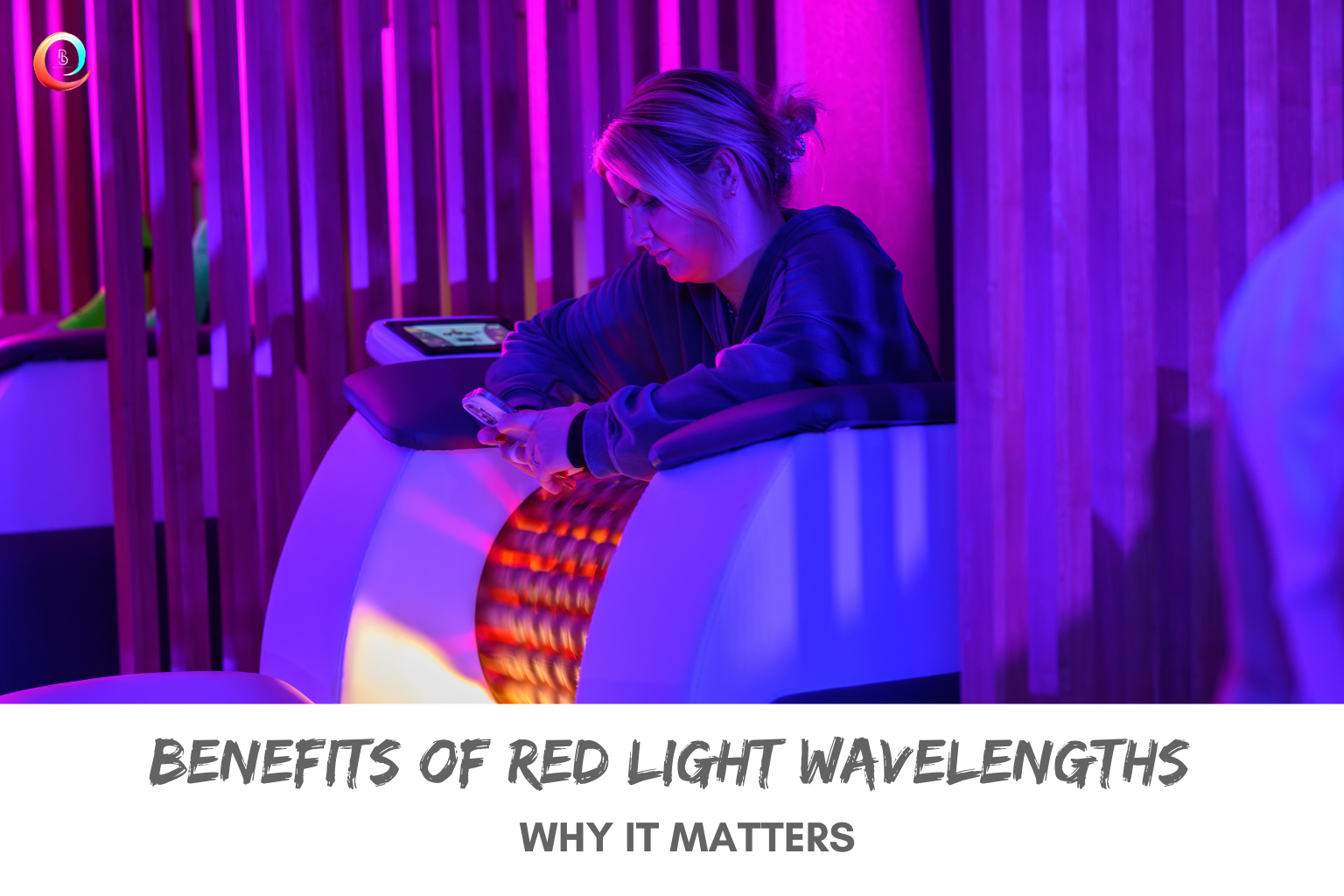
Two commonly used photobiomodulation (PBM) ranges are visible red light (approximately 630–670nm) and near-infrared light (approximately 800–850nm). At Body Lab Studio in Myrtle Beach, our POLY system delivers 633nm red light for skin-focused sessions. Near-infrared wavelengths in the 800–850nm range are commonly used in research for deeper tissue applications such as muscle and recovery support.
These wavelengths fall within a frequently referenced “optical window” (roughly 600–900nm) where light penetration in tissue is generally higher. When delivered at appropriate, non-thermal doses, they are designed to stimulate cellular activity rather than rely on heat. Matching the wavelength to your goal helps ensure a more purposeful, evidence-aligned approach.
Quick Science Primer on Wavelength Differences
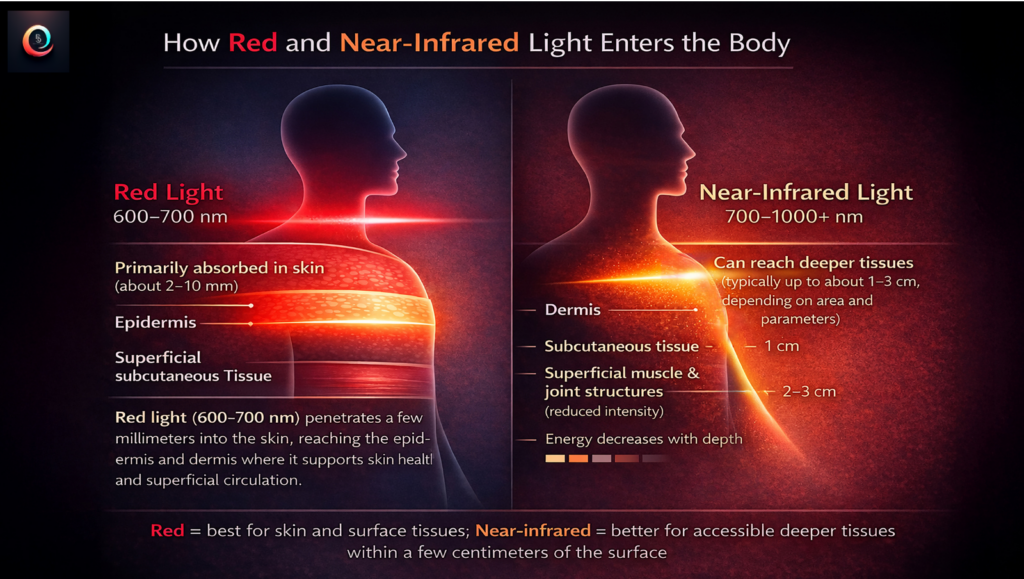
660nm Red Light
Visible red light at or near 660 nanometers is absorbed strongly in the upper layers of the skin. Fibroblasts, keratinocytes, and their mitochondria interact directly with this light.
The primary mitochondrial chromophore involved is cytochrome c oxidase, a key enzyme in cellular respiration.
When stimulated by red light, cellular processes may include:
- Increased ATP production
- Modulation of reactive oxygen species signaling
- Activation of transcription factors linked to collagen synthesis
- Support for extracellular matrix organization
- Regulation of inflammatory signaling pathways
Because visible red light does not penetrate as deeply as near-infrared wavelengths, 660nm is typically used for more superficial targets such as the epidermis and upper dermis, areas associated with skin tone, texture, and barrier-related concerns.
Depth of effect depends on device settings and dosing, but red wavelengths are generally selected when the goal is surface-level skin support rather than deeper tissue applications.
850nm Near-Infrared Light
Near-infrared light around 850 nanometers is invisible to the eye and generally penetrates deeper than visible red light. Depending on the device and dose, it may reach deeper dermal and some subdermal tissues, supporting applications beyond the skin’s surface.
In deeper structures, near-infrared light may:
- Stimulate mitochondrial ATP production
- Influence nitric oxide release and vascular tone
- Modulate inflammatory signaling
- Affect nociceptive pathways linked to discomfort and stiffness
Because of this deeper penetration profile, near-infrared wavelengths are frequently selected in research examining muscle recovery, joint comfort, circulation support, and neurologic applications.
Photobiomodulation vs Far-Infrared Heat
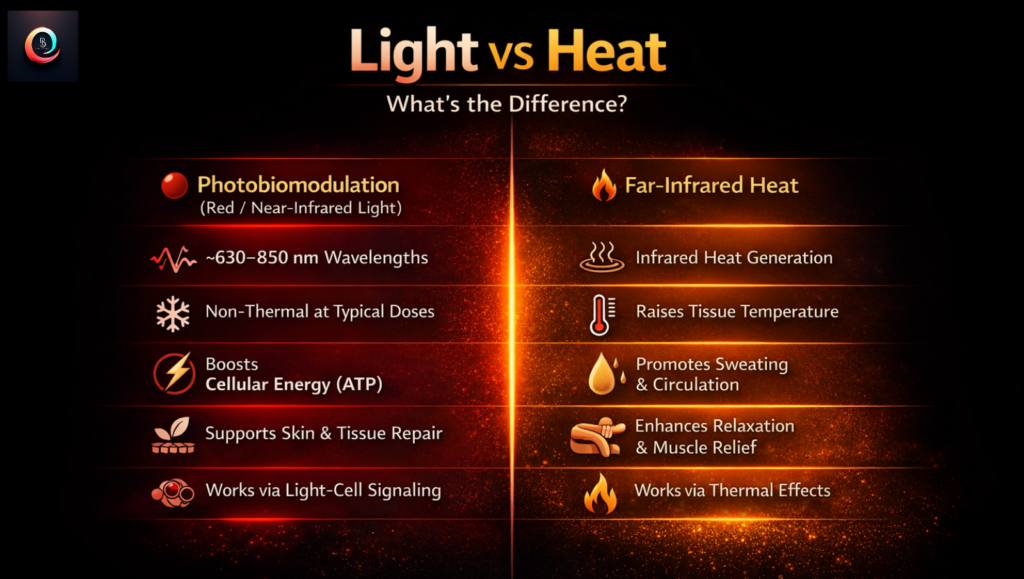
It is important to clarify that photobiomodulation using 660nm and 850nm wavelengths is not the same as far-infrared heat therapy.
Photobiomodulation:
- Uses specific wavelengths of visible red or near-infrared light
- Targets mitochondrial chromophores
- Operates through light-cell interaction
- Does not rely on thermal heating
Far-infrared heat:
- Primarily increases tissue temperature
- Promotes sweating and passive circulation
- Does not directly stimulate cytochrome c oxidase
- Works through thermal mechanisms rather than photochemical signaling
Both modalities have wellness applications, but when comparing 660nm vs 850nm, the discussion refers specifically to non-thermal light-driven cellular signaling, not heat-based therapy.
Ready to book PBM laser therapy?
Book HereKey Benefits at Each Wavelength
Wavelength Modality | Primary Penetration | Best For | Typical Studio Use at Body Lab |
633–660nm Red Light | Epidermis and superficial dermis | Skin texture, tone, collagen support, redness modulation | POLY red light facial sessions |
~800–850nm Near-Infrared PBM | Deeper dermis and superficial musculoskeletal tissues | Muscle recovery support, joint comfort, inflammation modulation | Technician-guided PBM sessions |
Far-Infrared Heat | Thermal tissue heating | Relaxation, sweating, circulation support | Infrared pod sessions |
660nm Red Light: Targeting Visible Change in Skin
Red wavelengths in the 630 to 670 nanometer range have been widely studied for anti-aging, photodamage, and wound healing.
When delivered repeatedly over time, 660nm exposure may promote:
- Increased ATP production in fibroblasts
- Controlled signaling responses that stimulate collagen and elastin
- Improved dermal structure and firmness
- Modulation of inflammatory cytokines that support healing
- Enhanced barrier repair
Clinical trials using visible red and near-infrared combinations over several weeks have reported improvements in wrinkle depth, skin roughness, and intradermal collagen density with high patient satisfaction and no major adverse events.
Top 660nm Benefits for Skin
Based on clinical and mechanistic research, 660nm red light may help:
- Support new collagen production
- Improve fine lines and texture
- Calm visible redness
- Accelerate recovery from irritation or procedures
- Brighten overall complexion
Who Benefits Most from 660nm
- Clients seeking non-invasive skin rejuvenation
- Individuals with dull or uneven tone
- Sensitive skin types preferring gentle modalities
- Clients pairing light therapy with cosmetic treatments
660nm is typically delivered through calibrated LED systems designed around clinically studied wavelengths and dosing parameters.
850nm Near-Infrared: Deeper Healing and Recovery
Near-infrared wavelengths between 800 and 880 nanometers demonstrate stronger penetration into muscle and joint tissues.
Randomized controlled trials examining 830nm low-level laser therapy before high-intensity exercise have shown reductions in biochemical markers of muscle damage compared with placebo.
Systematic reviews of low-level light therapy for knee osteoarthritis report that PBM was superior to sham treatment for pain reduction. Effects on function and stiffness were less consistent, and certainty of evidence was rated low to very low in some analyses. This highlights benefit potential while acknowledging research limitations.
Near-infrared wavelengths have also been investigated in neurologic and cerebral blood flow research, where repeated exposure protocols show measurable biological activity in neural tissues.
Top 850nm Benefits
Commonly associated benefits include:
- Reduced muscle soreness
- Support for joint comfort
- Improved local circulation
- Recovery enhancement after intense activity
- Emerging neurologic support applications
Who Benefits Most from 850nm
- Active individuals and athletes
- Clients with persistent joint stiffness
- Individuals seeking non-drug recovery tools
- Clients combining light therapy with bodywork or lymphatic drainage
Dual Wavelength Sessions: Why 660nm and 850nm Work Better Together
Red 660nm light primarily influences surface tissues and collagen remodeling.
Near-infrared 850nm penetrates deeper structures, supporting recovery and circulation.
Using both together provides layered benefits:
- Surface rejuvenation plus deeper circulation support
- Improved skin quality alongside musculoskeletal recovery
- Complementary mitochondrial stimulation at multiple tissue depths
Multi-wavelength protocols in clinical trials have demonstrated improved wrinkle reduction, texture, and collagen density compared with baseline. Mechanistic research supports nitric oxide release, mitochondrial activation, and modulation of inflammatory pathways across both wavelength ranges.
Together, these effects explain why dual-wavelength systems often deliver broader outcomes than single-wavelength setups.
Curious which wavelength fits your goals?
Get A Free ConsultationHow to Maximize Red Light Therapy Results
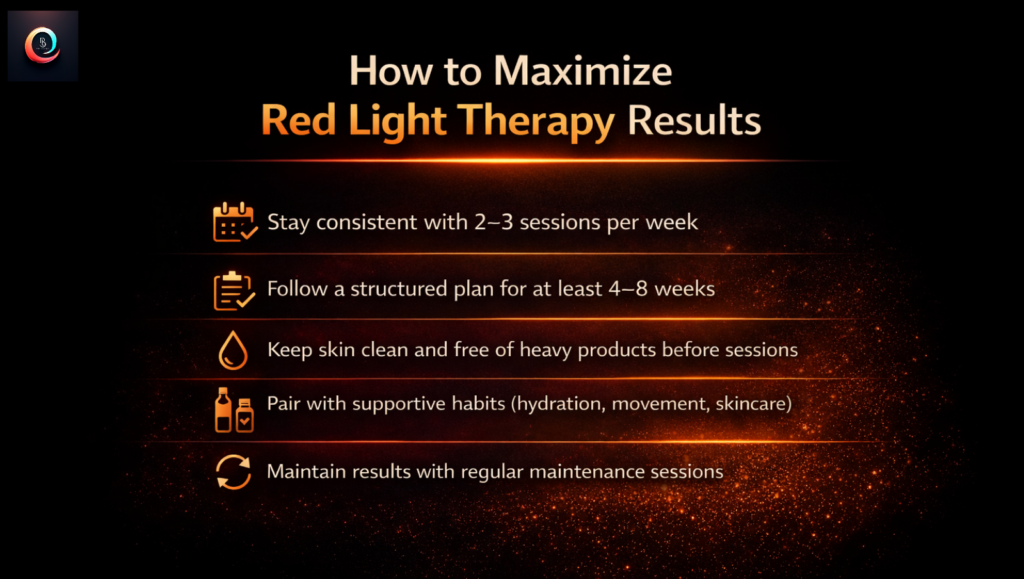
For Skin-Focused Goals
- Schedule red light sessions 2 to 3 times weekly
- Maintain consistency for 4 to 8 weeks
- Combine with barrier-supportive skincare
- Continue maintenance sessions weekly or biweekly
Repeated moderate exposure is more effective than infrequent high-dose sessions.
For Recovery and Deeper Wellness
- Use near-infrared sessions after intense workouts
- Follow structured weekly scheduling
- Combine with stretching, movement, or lymphatic drainage
- Track cumulative improvements over 1 to 3 months
For Full-Spectrum Benefits
- Combine 660nm facial sessions with 850nm recovery sessions
- Maintain consistent scheduling over 8 to 12 weeks
- Stack with fitness, nutrition, and recovery strategies
Choosing the Right Wavelength for Your Goals
660nm red light supports collagen, surface renewal, and glow.
850nm near-infrared supports deeper recovery, circulation, and musculoskeletal comfort.
When combined, they create a layered approach that supports both visible and functional outcomes. Regular exposure over weeks allows cellular adaptation, repair, and measurable change.
At Body Lab Studio in Myrtle Beach, protocols are designed around clinically studied wavelength ranges to ensure each session is purposeful, structured, and aligned with biological evidence.
Frequently Asked Questions About Red Light Therapy
1. Is One Wavelength Better Than the Other?
No. Each wavelength serves different biological targets.
660nm focuses on:
- Fine lines
- Tone and texture
- Surface healing
850nm focuses on:
- Muscles
- Joints
- Circulation
- Deeper tissue recovery
Many clients benefit most from combining both.
2. Can I Use Both at the Same Time?
Yes. Many clinical and wellness protocols combine visible red and near-infrared light in the same session.
Research indicates combination approaches are:
- Safe
- Well tolerated
- Biologically complementary
3. Does All Red Light Therapy Equipment Deliver the Same Results?
No. Effective systems should:
- Use research-backed wavelengths such as 633nm, 660nm, or 830–850nm
- Deliver appropriate irradiance levels
- Provide consistent dosing aligned with clinical protocols
- Reference validated treatment parameters
Devices that do not specify wavelength or power output may not deliver equivalent results.
References
Boyer, D. S., Hu, A., Warrow, D., Xavier, S., Gonzalez, V., Lad, E., Rosen, R. B., Do, D., Schneiderman, T., Ho, A., Munk, M. R., Jaffe, G., Tedford, S. E., Croissant, C. L., Walker, M., Rückert, R., & Tedford, C. E. (2024). LIGHTSITE III: 13-month efficacy and safety evaluation of multiwavelength photobiomodulation in nonexudative age-related macular degeneration using the Valeda light delivery system. Retina, 44(3), 487–497.
https://pubmed.ncbi.nlm.nih.gov/36971760/
Fan, T., Lau, W. Y., Zhang, G., Lee, R., & Chan, K. (2024). A systematic review and network meta-analysis on the optimal wavelength of low-level light therapy in treating knee osteoarthritis symptoms. Aging Clinical and Experimental Research, 36(1), 203.
https://pmc.ncbi.nlm.nih.gov/articles/PMC11455796/
Ferraresi, C., Beltrame, T., Fabrizzi, F., Sanches Pereira do Nascimento, E., Karsten, M., Francisco, C. O., Borghi-Silva, A., Leal Junior, E. C. P., Lopes-Martins, R. A. B., & de Oliveira, C. (2011). Effect of 830 nm low-level laser therapy applied before high-intensity exercises on skeletal muscle recovery in athletes. Lasers in Medical Science, 26(3), 349–358.
https://pubmed.ncbi.nlm.nih.gov/21148579/
Herrera, M. A., Ribas, A. P., Rodrigues, A. P., da Costa, P. E., Oliveira, A. M., & Baptista, M. S. (2024). Red-light photons on skin cells and the mechanism of photobiomodulation. Frontiers in Photonics, 5, 1460722.
https://www.frontiersin.org/articles/10.3389/fphot.2024.1460722
Salehpour, F., Mahmoudi, J., Kamari, F., Sadigh-Eteghad, S., Rasta, S. H., & Hamblin, M. R. (2018). Brain photobiomodulation therapy: A narrative review. Molecular Neurobiology, 55(8), 6601–6636.
https://pmc.ncbi.nlm.nih.gov/articles/PMC6041198/
Wang, J., Liu, L., Song, Y., & Hamblin, M. R. (2024). Unlocking the power of light on the skin: Mechanisms and clinical applications of cutaneous photobiomodulation. International Journal of Molecular Sciences, 25(8), 4483.
https://pubmed.ncbi.nlm.nih.gov/38674349/
Whelan, H. T., Lee, C., Eells, J., Wong-Riley, M., et al. (2014). A controlled trial to determine the efficacy of red and near-infrared light treatment in patient satisfaction, reduction of fine lines, wrinkles, skin roughness, and intradermal collagen density increase. Photomedicine and Laser Surgery, 32(2), 93–100.
https://pubmed.ncbi.nlm.nih.gov/24286286/