Table of Contents
If you’re still sore two or three days after a hard workout, a long physical shift, or just an unusually active week, that’s normal, and real things exist that make a difference. Recovery comes down to a few basics working together:
- Enough sleep
- Enough water
- Gentle movement to keep blood flowing
- Added support like infrared heat or mechanical rolling for a lot of people
There’s no single fix. But if soreness isn’t easing up after a day or two, the basics alone tend to fall short, and that’s where added recovery support tends to make the biggest felt difference.
You don’t need to be an athlete for this to apply. Plenty of people feel this after a physical job, a long shift on your feet, or just getting back into a routine.
A server standing for a ten hour shift during a busy tourist weekend deals with the same kind of ache as someone who hit the gym hard on Monday. So does a landscaper working a Grand Strand summer, or a nurse pulling a long overnight rotation. Soreness doesn’t check your job title before it shows up.
What tends to surprise people most is the delay
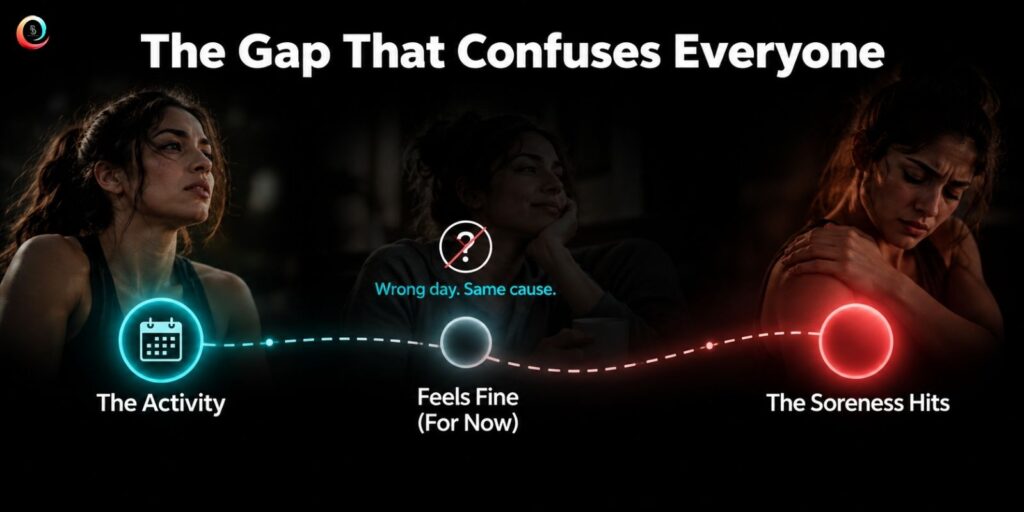
The ache rarely shows up right away. It builds over the next day or two, peaks, and then starts to ease. That gap between the activity and the discomfort is exactly why so many people feel blindsided by it, wondering what they did wrong when really, nothing went wrong at all.
That delay also trips people up when they’re trying to figure out what caused it. Saturday’s soreness is far more likely to trace back to Thursday’s activity than Friday’s, and by the time the ache shows up, the actual cause has already faded from memory. That’s exactly why so many people assume something new is wrong instead of connecting it to a shift or workout from a couple of days earlier.
For the full rundown of muscle recovery in Myrtle Beach, that page covers all of it. This post is about why you’re sore in the first place and which of those options actually fit your situation.
Curious what would ease your soreness?
A short conversation is the easiest way to find out. No pressure, no commitment.
Get StartedWhy You're Still Sore Days Later
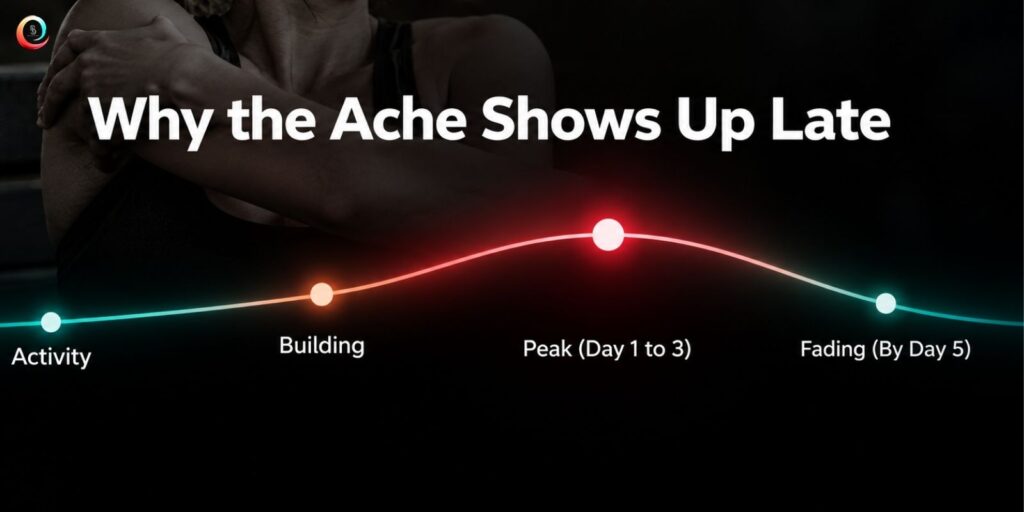
That deep, achy soreness a day or two after exertion has a name: delayed onset muscle soreness, or DOMS. It’s a normal response to physical stress your muscles aren’t used to, not a sign that something’s wrong.
Here’s what’s actually happening:
- Tiny, microscopic stress builds up in muscle fibers during activity
- Your body starts repairing that stress almost right away
- The repair process itself causes the ache you feel
- Soreness peaks one to three days after activity, most of the time
- It fades on its own within about five days, without any treatment needed
None of this depends on being an athlete. A workout can trigger it, but so can a long shift on your feet, a physical job, and even a weekend spent more active than usual. Work in hospitality, healthcare, or the trades here on the Grand Strand, and this soreness probably feels familiar even without ever stepping into a gym.
Age plays a role too, even though nobody likes hearing that. Recovery slows down gradually as the years pass, so a hard week that used to fade in a day now lingers for three. That’s not a sign of anything going wrong in your body. It’s just a normal shift that happens to almost everyone eventually, and it’s one more reason added recovery support becomes more useful over time rather than less.
The Basics That Actually Work
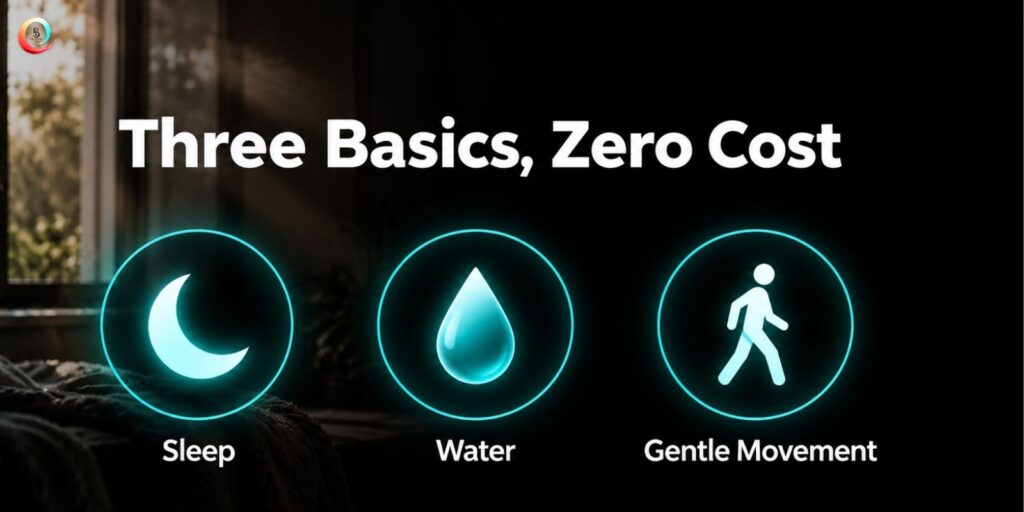
Before anything else, a few honest basics matter more than any treatment. None of these are a Body Lab service.
- Sleep: your body does its heaviest repair work while you’re asleep, so skimping on it slows everything down
- Water: dehydrated muscles recover more slowly and tend to feel stiffer, longer
- Gentle movement: a walk, a light stretch, or easy activity keeps blood flowing to sore areas without adding more stress
None of these require special equipment, and none need a membership. They’re free, and they matter more than anything covered in the sections below.
Most people already know this list. Knowing it and actually doing it during a busy week are two different things, though. Sleep gets cut short when work runs late. Water gets forgotten between meetings or shifts.
A short walk feels like one more task on a list that’s already too long. None of that makes the basics less important. It just means most soreness isn’t caused by bad luck. It’s caused by a week where the basics quietly slipped, without anyone noticing until the ache showed up.
If you want a few habits to build on top of these basics, daily lymphatic flow habits covers that in more depth.
Where Added Recovery Support Comes In
Once the basics are covered and soreness is still hanging around, added recovery support tends to make the biggest felt difference. This is the part people ask about first, and the part most mixed up or oversold elsewhere. Here’s what that looks like at Body Lab:
Infrared Support: Deluxe PODs
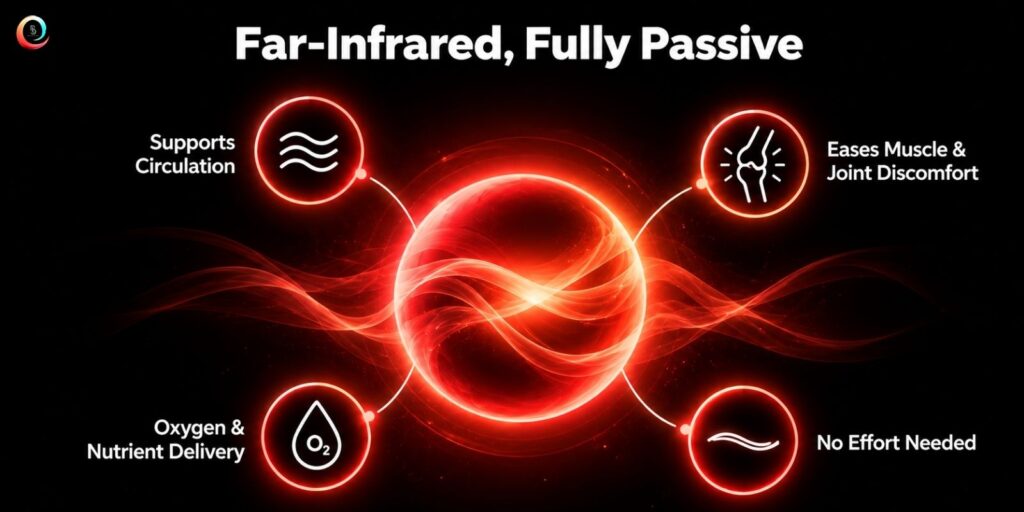
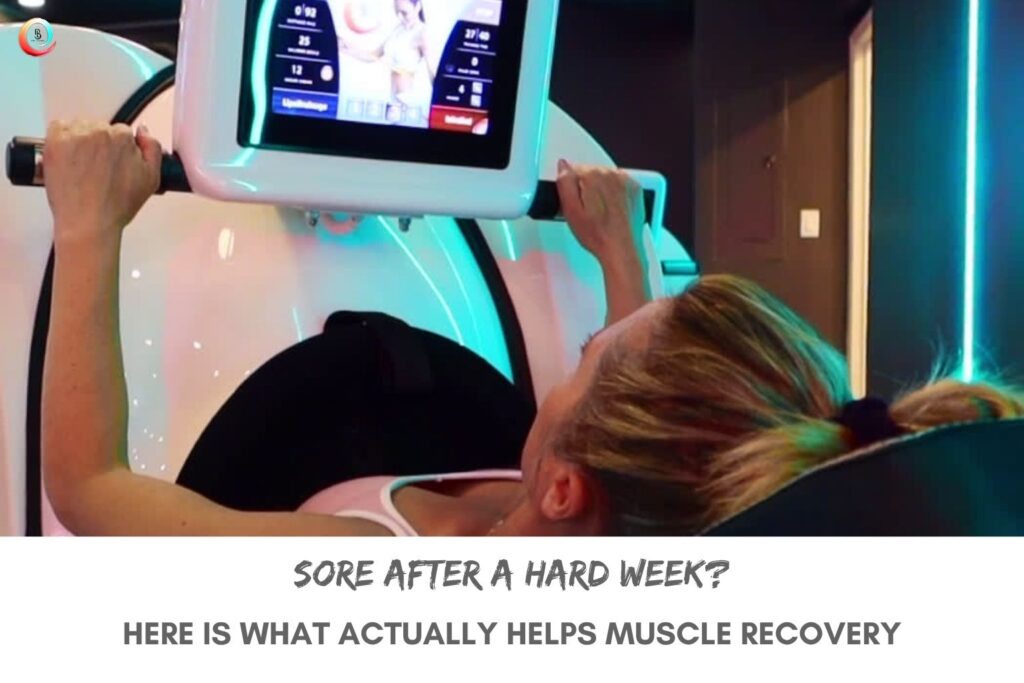
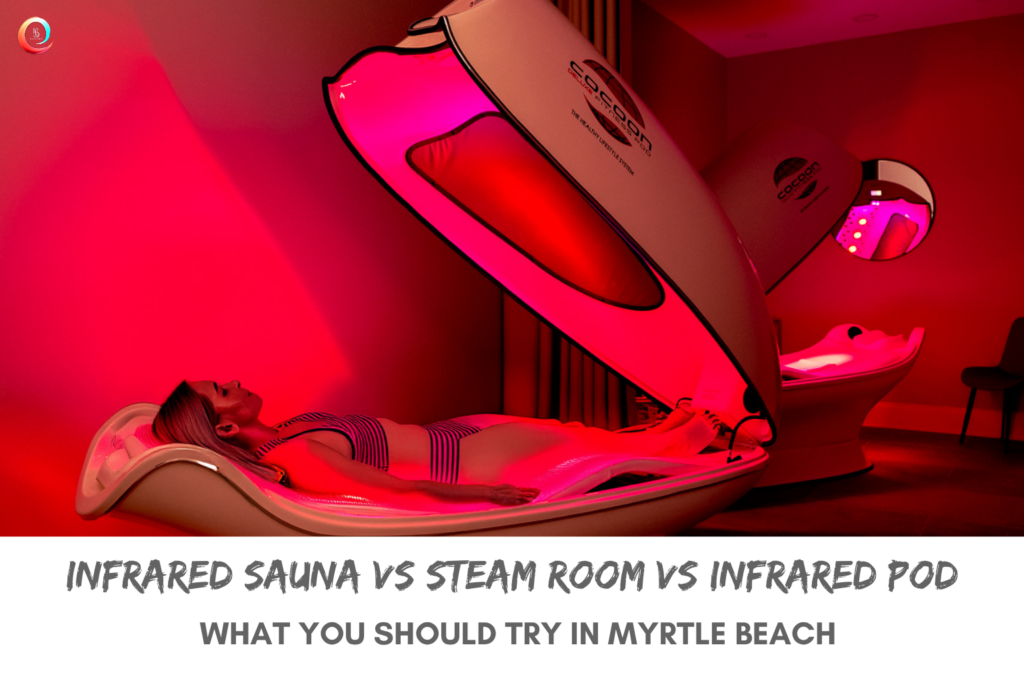
The Deluxe PODs use far-infrared heat, a passive kind of warmth that surrounds you rather than anything you actively work through. This isn’t the same as the infrared fitness treadmill, which pairs movement with a different type of infrared light. It isn’t a sauna either. Many people feel looser and more comfortable after a session, most of all when soreness has settled into one area. Deluxe PODs are designed to support recovery, not replace it.
Mechanical Rolling: Infrared Body Roller
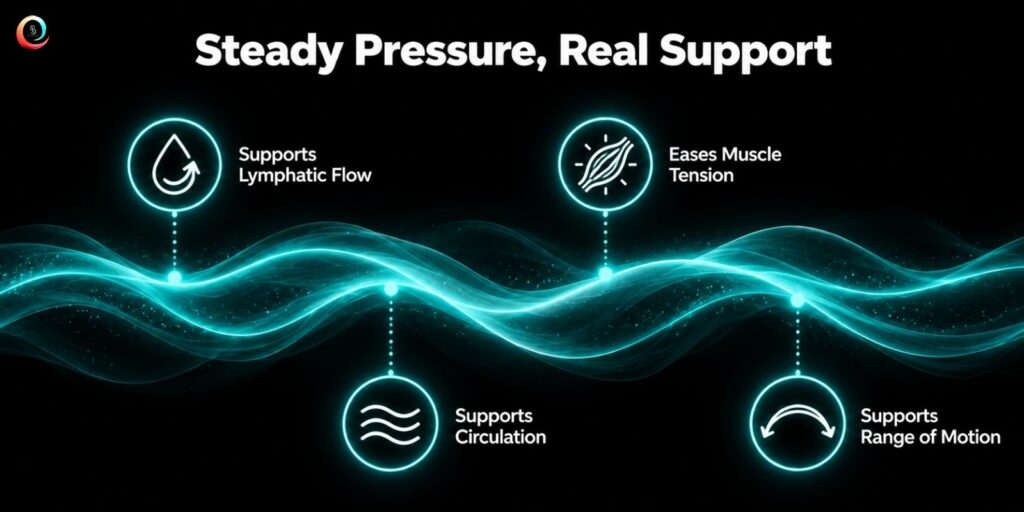
The infrared body roller applies steady, consistent rolling pressure across sore muscle groups. It’s a different mechanism than a massage therapist’s hands, but the goal is similar: leaving you feeling less tight and more at ease. Many people describe looser muscles right after a session, and it becomes the first thing they reach for when soreness settles into the legs or back after a long day standing.
Microvibration Support
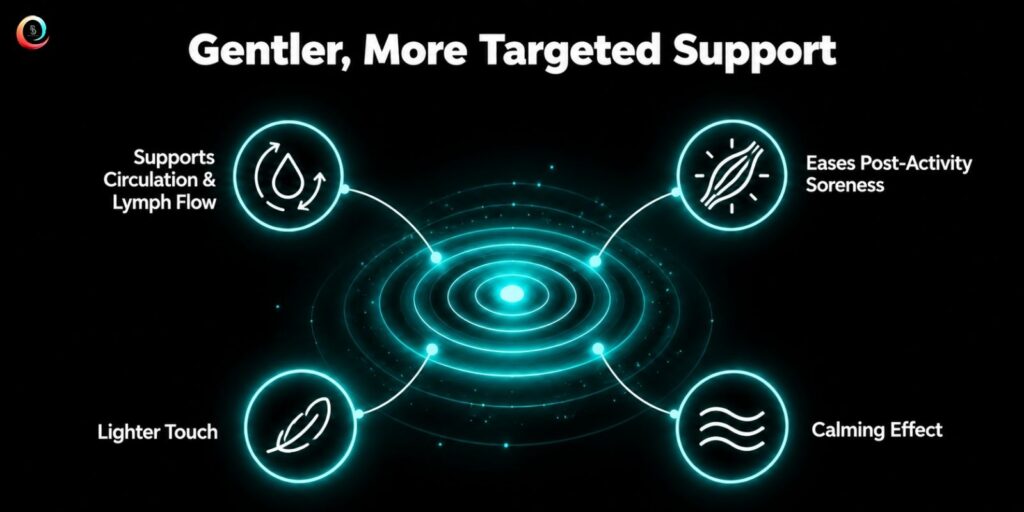
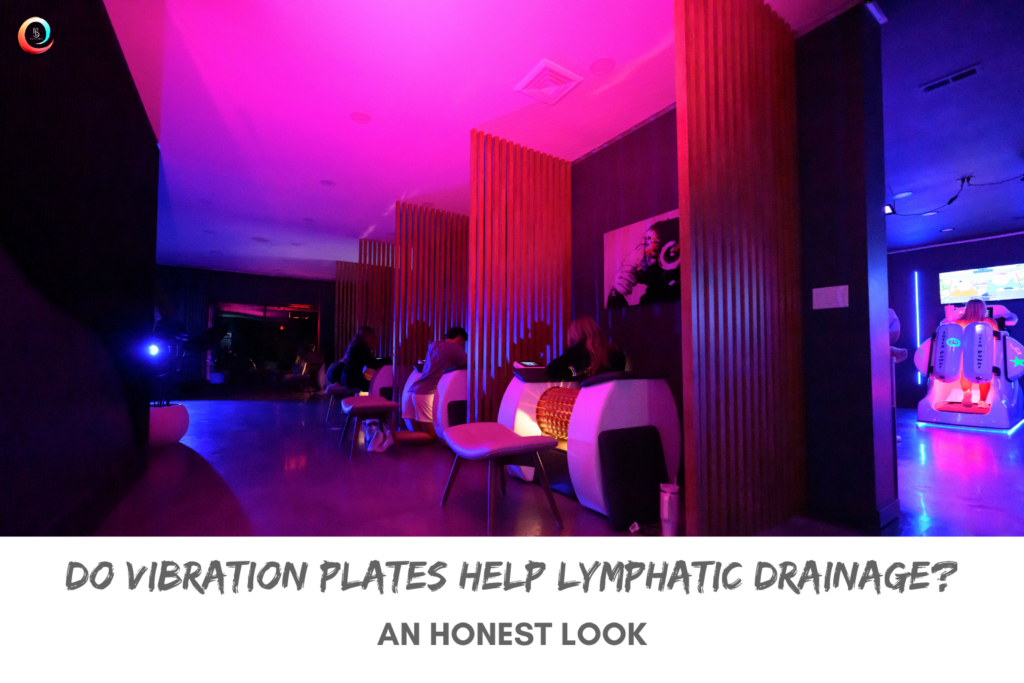
Microvibration rollers add a gentler, more targeted option for people who want circulation-focused support without heat. It’s a good fit for anyone sensitive to warmth, or for a spot on the body that just needs a lighter touch than a full pod session or the roller. Combined, these three options cover most of what people ask about when soreness won’t quit on its own, and picking between them comes down to which sensation feels right, not which one is objectively better.
These same muscle recovery options get covered in more depth on our dedicated service page, if you want to compare them side by side before booking anything.
Session Frequency for Recovery Support
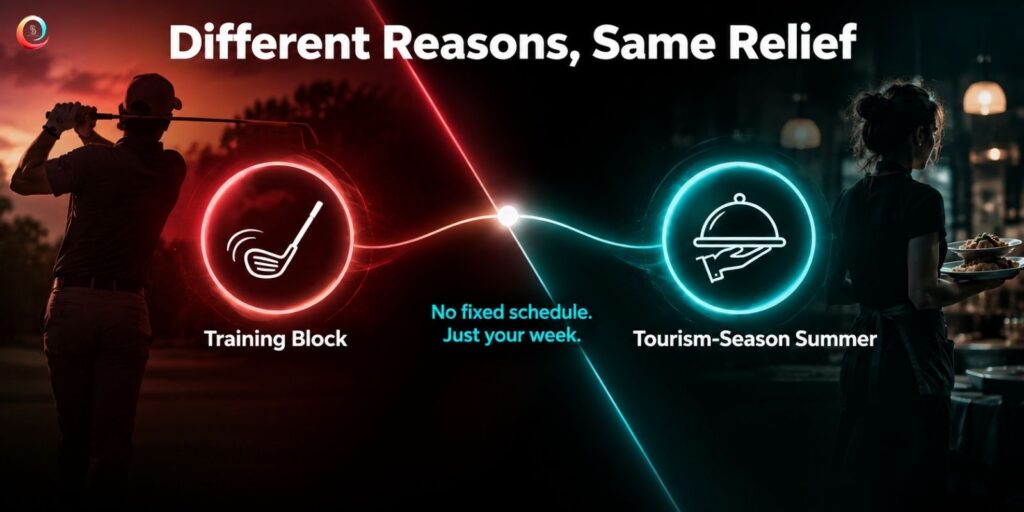
Frequency depends entirely on what’s driving the soreness in the first place. Someone deep into a heavy training block might come in weekly. Someone working through a physically demanding tourism-season summer, on their feet twelve hours a day, might land on a similar weekly rhythm, for entirely different reasons.
Neither approach is more correct than the other. A golfer prepping for a tournament and a restaurant worker closing every shift through August end up in the same building for completely different reasons, and both walk out feeling the same kind of relief. The pattern that fits one person rarely fits the next, which is exactly why the team builds a plan around the actual week you’re having rather than a fixed schedule pulled from a brochure.
There’s no universal number here. This is what actually matters:
- How physically demanding your week has been
- Whether soreness shows up once or keeps returning
- How your body responds after a session or two
- Whether you’re building toward a goal or just trying to feel normal again
Some people come in once, feel the difference, and only come back the next time a hard week catches up with them. Others settle into a steady rhythm because their work or training stays demanding week after week. Both are reasonable ways to use recovery support, and neither one is the “right” way that the other should be measured against.
If you’re new to any of this, starting here is the easiest first step before booking anything.
When Soreness Is More Than Normal
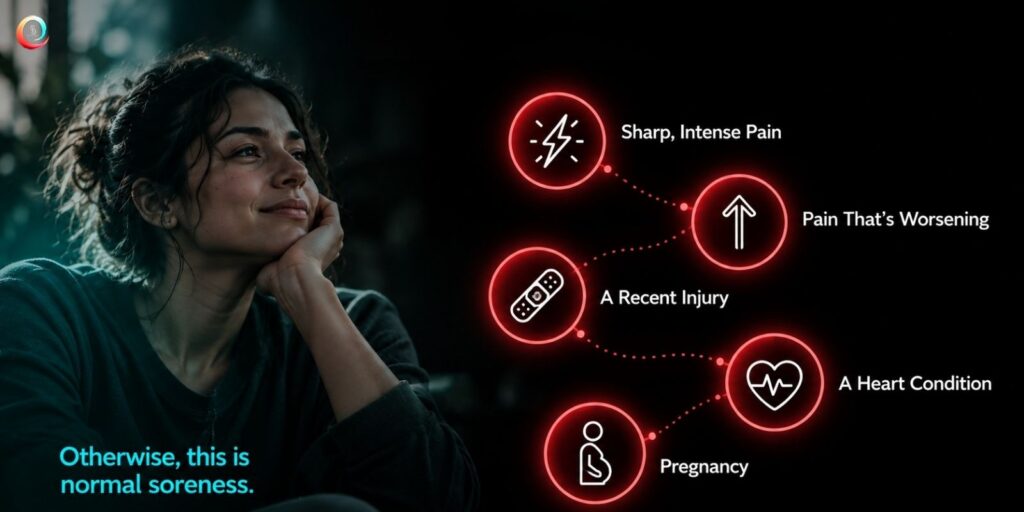
Ordinary soreness is uncomfortable, but it follows a predictable pattern. Some signs point to something different, and those are worth taking seriously.
Check with a doctor before starting infrared or mechanical recovery support if you notice:
- Stabbing or intense pain, rather than a general dull ache
- Pain that keeps getting worse instead of easing over a few days
- A recent injury in the affected area
- A heart condition
- Pregnancy
None of this is meant to alarm anyone. Most soreness people feel after a hard week fits the normal pattern described earlier. This is simply the line between typical soreness and something a professional should look at first. If nothing on that list applies to you, the odds are strong that what you’re dealing with is nothing more than a body catching up on repair work, and that’s exactly the kind of soreness the rest of this post covers.
A rough gut check that helps most people: normal DOMS eases a little each day. If a day passes and the discomfort is flat or worse than the day before, that’s a reason to get it looked at rather than wait it out.
A Quick Myth Check
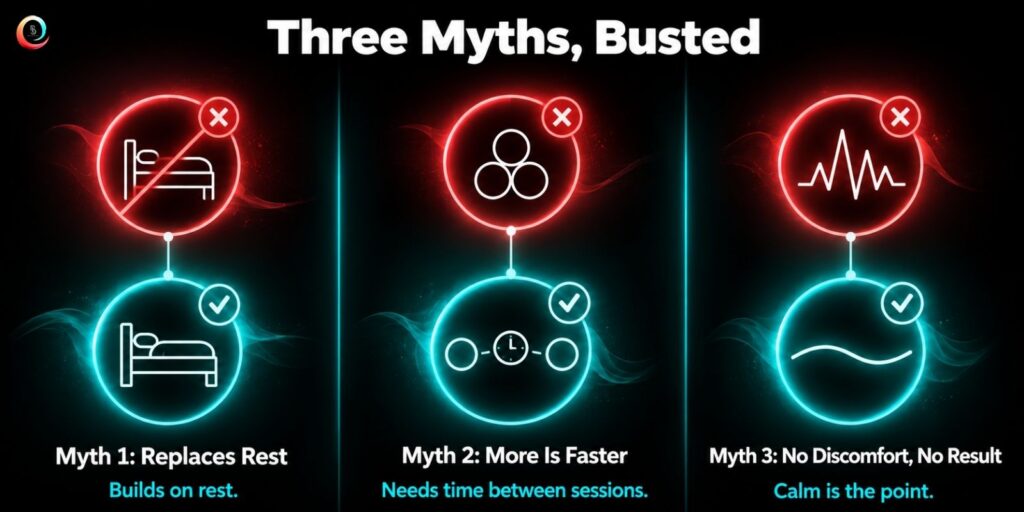
Myth 1: Recovery Treatments Replace Rest
Recovery support, whether that’s infrared heat, mechanical rolling, or anything else, isn’t a substitute for sleep or hydration. Skipping rest and leaning on treatments instead won’t get you the same result, no matter how many sessions you stack on top of each other. A pattern of late nights and no water still catches up eventually, treatments or not.
Myth 2: More Sessions Always Means Faster Results
Stacking sessions back to back doesn’t speed up repair the way people assume it will. Muscle tissue needs time between sessions to actually do the repair work, not just more exposure to heat or pressure. A pace that matches your body’s response tends to serve you better than a packed calendar shaped around the idea that more is automatically better.
Myth 3: If It's Not Uncomfortable, It Isn't Working
Passive heat and gentle rolling pressure are supposed to feel comfortable, not intense. Some people assume a session has to feel like deep tissue work or it isn’t doing anything, but that’s not how these particular tools are designed to work. Feeling calm and eased during a session isn’t a sign that nothing’s happening. It’s the point.
Still sore and not sure where to start?
Talk it through with the team before you decide anything.
Book A Free ConsultationThe Bottom Line
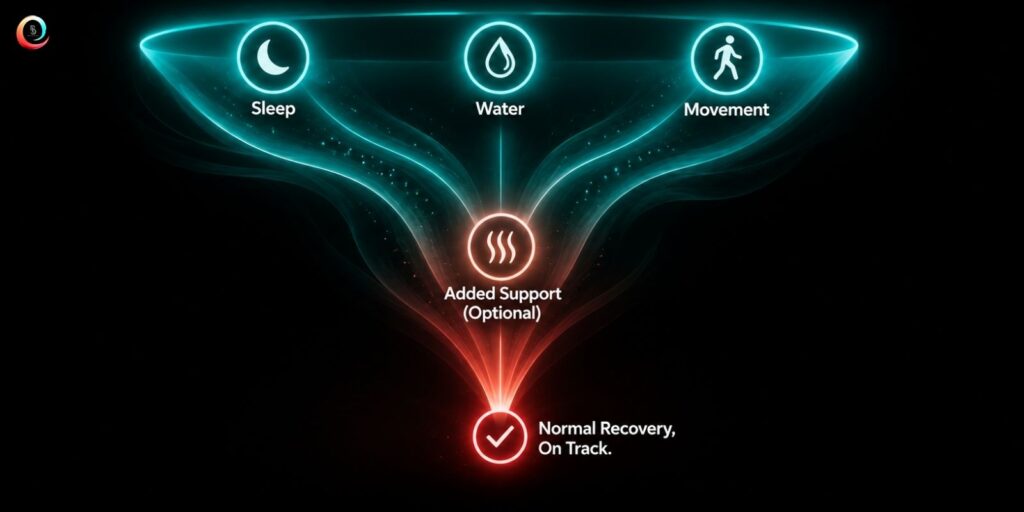
Soreness a day or two after a hard week is almost always DOMS, and it clears up on its own within about five days. Sleep, water, and gentle movement do the heaviest lifting, and infrared heat, mechanical rolling, or microvibration support can ease the discomfort further once those basics are already in place. None of it replaces rest, and none of it needs to happen on a fixed schedule. Watch for the handful of warning signs covered above, and if none of them apply, what you’re feeling is your body doing exactly what it’s supposed to do.
Ready to feel less stiff?
See the full range of recovery support options in one place.
See Recovery TreatmentsMore on Recovery
If soreness keeps showing up after the same activities, these might be worth a read too:
- Golf recovery guide, for anyone playing several rounds in a short stretch
- Why legs feel heavy, a related but different kind of post-activity discomfort
- Post-workout recovery, for a deeper look at recovering after training
Frequently Asked Questions
It's most likely delayed onset muscle soreness, a normal response to physical stress your muscles aren't used to. It peaks somewhere around 24 to 72 hours after activity and eases on its own, though sleep, hydration, and gentle movement tend to speed that up.
Sleep, hydration, and gentle movement form the foundation. Many people add infrared support or mechanical rolling on top of those basics to feel less stiff, faster.
Far-infrared heat, like Body Lab's Deluxe PODs, is a passive-heat option many people use to support recovery and feel more comfortable after physical activity.
A mechanical body roller applies consistent rolling pressure and is designed to support circulation and comfort. It's a different mechanism than hands-on massage, though the goal, feeling looser, is similar.
No. They're designed to support recovery alongside rest and hydration, not replace them.
Body Lab Studio offers several muscle recovery services, including far-infrared Deluxe PODs, an infrared body roller, and microvibration rollers. See the full muscle recovery Myrtle Beach service page for the complete list.
References
- Cleveland Clinic, “Delayed Onset Muscle Soreness (DOMS): What It Is and Treatment”: https://my.clevelandclinic.org/health/diseases/delayed-onset-muscle-soreness
- Johns Hopkins University Student Well-Being, “Workout Recovery: Sleep, Nutrition, Movement, Planning”: https://wellbeing.jhu.edu/blog/2020/08/11/workout-recovery-sleep-nutrition-movement-planning/