
How Often Should You Do Infrared Sessions for Best Results?
Wondering how often you need infrared sessions to see tangible results? Are you looking for easier recovery, reduced inflammation, a faster metabolism, or that firmer, smoother skin glow? At Body Lab Studio in Myrtle Beach, we hear this question all the time. New and regular clients, from busy parents to professional athletes, all want to know: “How often should I do infrared sessions? How much of this or that do I need to use, and when?”
The honest answer is that it is all about the routine. The most powerful infrared protocol is a consistent one, customized for your needs and goals. Infrared, red light therapy, and lymphatic modalities are not things you do once or twice and expect to solve a problem. Just like strength training or nutrition, the results are cumulative and build over time. Wellness is not that simple or easy, but our job is to make it effective, comfortable, and accessible for you.
Below is your science backed guide to getting and staying consistent with infrared sessions at Body Lab Studio, designed to help you achieve visible, cumulative results over time.
Why Infrared Wellness Consistency Matters
Infrared wellness, including infrared heat exposure, red light therapy, and lymphatic focused treatments, works through gradual physiological signaling. Each session provides a mild stimulus that supports circulation, relaxation, and cellular processes related to recovery and tissue health. These signals are subtle, and the body responds best when they are repeated consistently rather than delivered once in isolation.
Infrared heat and red light exposure have been shown to influence pathways involved in blood flow, nitric oxide signaling, mitochondrial activity, and cellular stress responses. These effects are dose dependent. That means the total exposure over time matters more than any single session. Repeated sessions allow the body to adapt and respond more effectively, similar to how repeated exercise sessions gradually improve strength or endurance.
Some research has examined the use of infrared sauna sessions added to regular training routines. In physically active adults, repeated post exercise infrared sauna use several times per week over multiple weeks has been shown to be safe and may support certain recovery and performance related measures. While changes in body composition are not guaranteed and results vary, these studies support the idea that infrared exposure is best viewed as a long term wellness habit rather than a one time intervention.
Additional research on far infrared sauna use suggests that repeated sessions may support circulation and vascular related markers when used regularly. These findings are still emerging and should be interpreted cautiously, but they reinforce the concept that consistency matters. Just like you would not expect long term fitness changes from one workout, infrared wellness benefits depend on repetition over time.
How Often Should You Use Infrared? Weekly and Monthly Recommendations
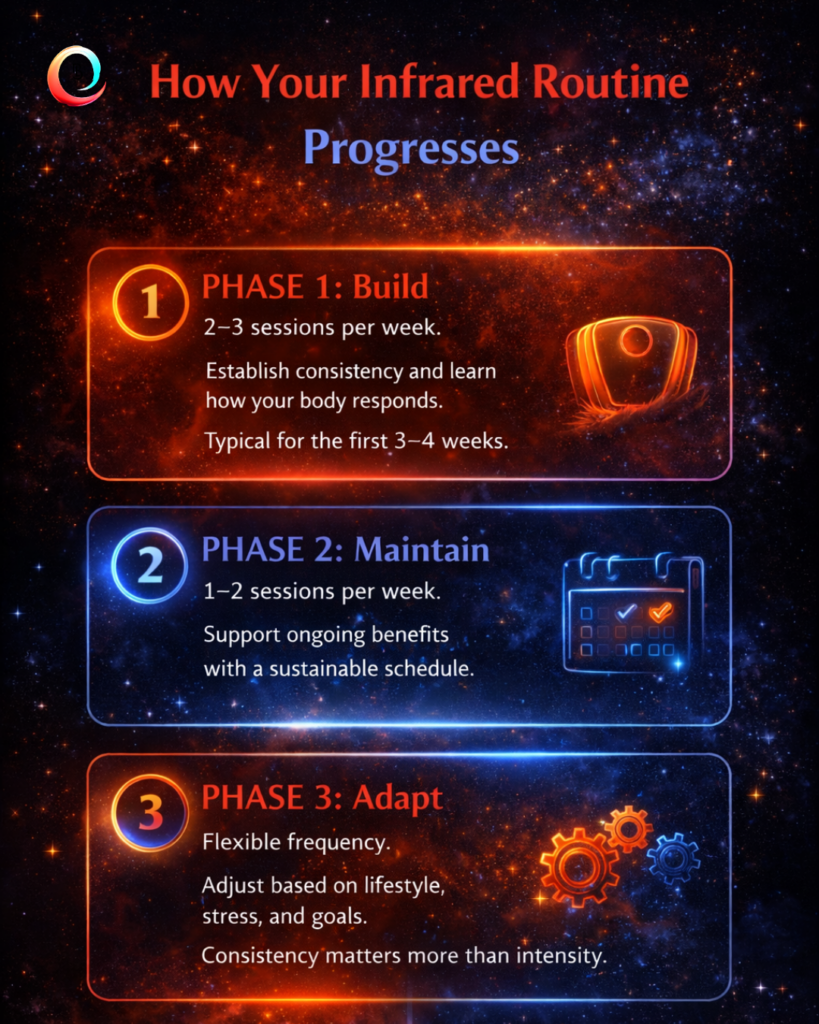
At Body Lab Studio in Myrtle Beach, we design frequency recommendations around three core ideas: getting your body up to a new baseline, maintaining that improvement, and adapting the protocol as your goals and life change. While every client’s plan is tailored individually, research and clinical experience support the following general framework for otherwise healthy adults.
- 2 to 3 sessions per week during the first month: This is ideal for jump starting circulation, supporting lymphatic flow, helping reset low grade inflammation, and generating early changes in energy, recovery, and skin texture. Far infrared sauna and photobiomodulation research that targets performance, recovery, and tissue change commonly uses repeated sessions over several weeks (Mero et al., 2015; Salehpour et al., 2018).
- 1 to 2 sessions per week once goals are met: After your initial transformation phase, one to two sessions per week usually work well to maintain benefits such as improved circulation, skin quality, and recovery. Long term observational sauna data suggest that even moderate weekly heat exposure, when maintained over years, can support cardiovascular and systemic health (Laukkanen et al., 2018).
Your body responds to consistent training signals. Infrared, red light, and lymphatic modalities tell your tissues to relax, recover, repair, and rejuvenate. When those messages are repeated regularly over weeks, you build a new normal. That is why we encourage you to think of infrared as part of your weekly routine, not an occasional treat.
Tailored Infrared Protocols: Specific Routines for Common Goals
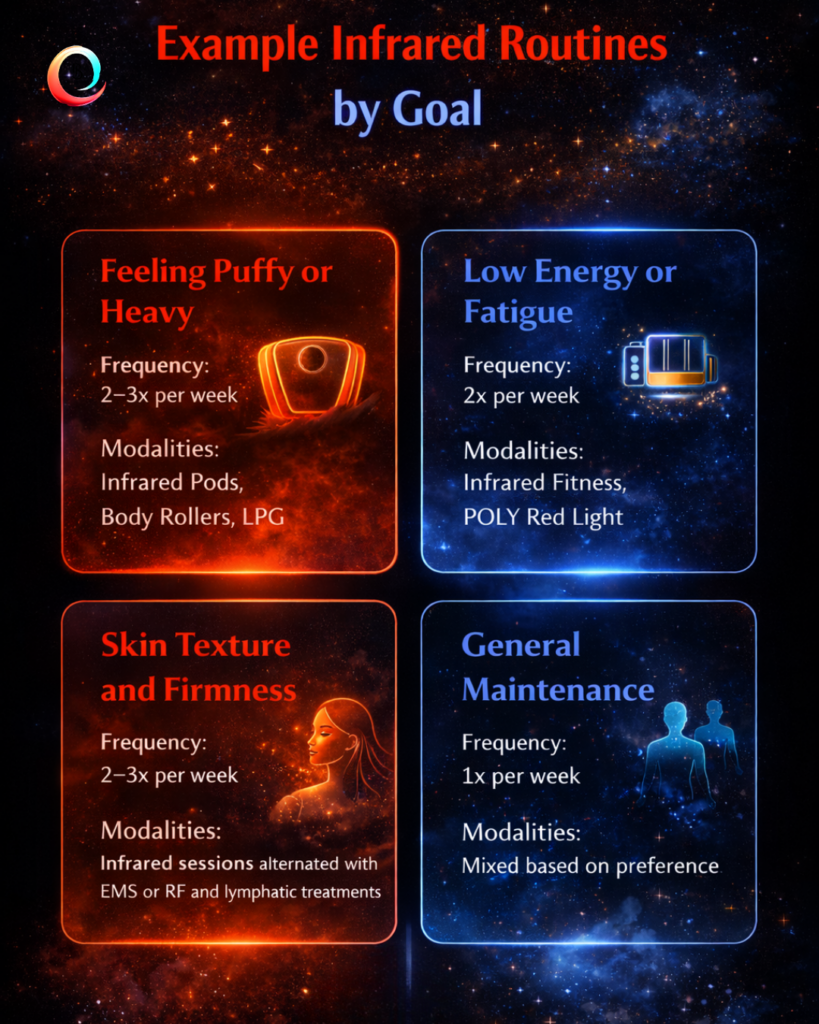
Your ideal routine depends on your goals, tolerance, and preferences. Below are example starting points based on how infrared, red light, and lymphatic focused modalities are commonly used in practice. These are not medical prescriptions and should be adjusted with staff guidance.
Goal or Focus | Suggested Frequency | Commonly Used Modalities at Body Lab Studio |
Feeling less puffy or heavy | 2 to 3 times per week | Infrared Wellness Pods, Body Rollers, LPG Endermologie |
Low energy or general fatigue | 2 times per week | Infrared Fitness, POLY Red Light Therapy |
Skin texture and firmness | 2 to 3 times per week | Infrared sessions paired across the week with EMS or RF sculpting and lymphatic focused treatments |
General maintenance | 1 time per week | Rotating modalities based on preference and tolerance |
Cosmetic and body contouring protocols using light based or mechanical approaches are typically delivered as a short series rather than isolated visits. Studies examining red light and low level laser techniques often use multiple sessions per week over several weeks to evaluate changes in tissue appearance. Mechanical lymphatic and connective tissue techniques have also shown cumulative effects when used consistently.
These examples reflect how Body Lab Studio structures routines in practice. Clients often begin with a more frequent schedule and then transition to a maintenance rhythm once they understand what works best for them.
How Long Should Infrared Sessions Be?
Session length matters just as much as frequency. Research suggests that there is a window in which tissues are warmed and light is absorbed enough to trigger beneficial cellular changes without overloading your system.
At Body Lab Studio, we typically use the following time ranges.
- Standard infrared sessions for the whole body: 30 to 40 minutes. This is generally the sweet spot for raising core body temperature and driving cardiovascular, metabolic, and relaxation benefits. In far infrared sauna recovery work, 30 minute sessions at moderate temperatures have been well tolerated and associated with improved neuromuscular recovery after training (Mero et al., 2015).
- Short, targeted sessions: 15 to 20 minutes. These are ideal when we are focusing red light or localized infrared on specific areas such as the face, joints, or a particular muscle group. Many photobiomodulation protocols in neurology and psychiatry use single session durations of 10 to 30 minutes, delivered several times per week over multiple weeks (Salehpour et al., 2018).
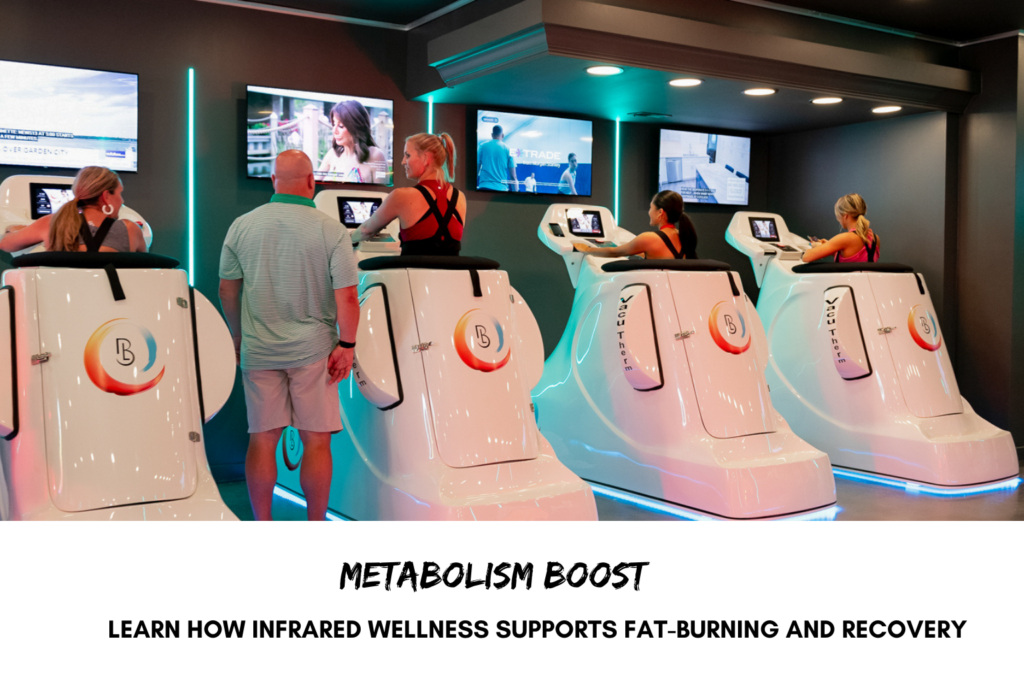
- Infrared fitness and active recovery: 30 to 45 minutes. Walking or light cardio inside an infrared pod or VacuTherm style environment keeps you in a comfortable but effective range where your heart rate is mildly elevated and tissue temperature and circulation are enhanced for sustained periods, paralleling time frames used in heat plus exercise research.
All of these durations are set within or below ranges used in clinical and research settings and are carefully monitored at Body Lab Studio with modern equipment and trained staff.
Why Consistency and Dose Matter: The Science of Cumulative Benefits
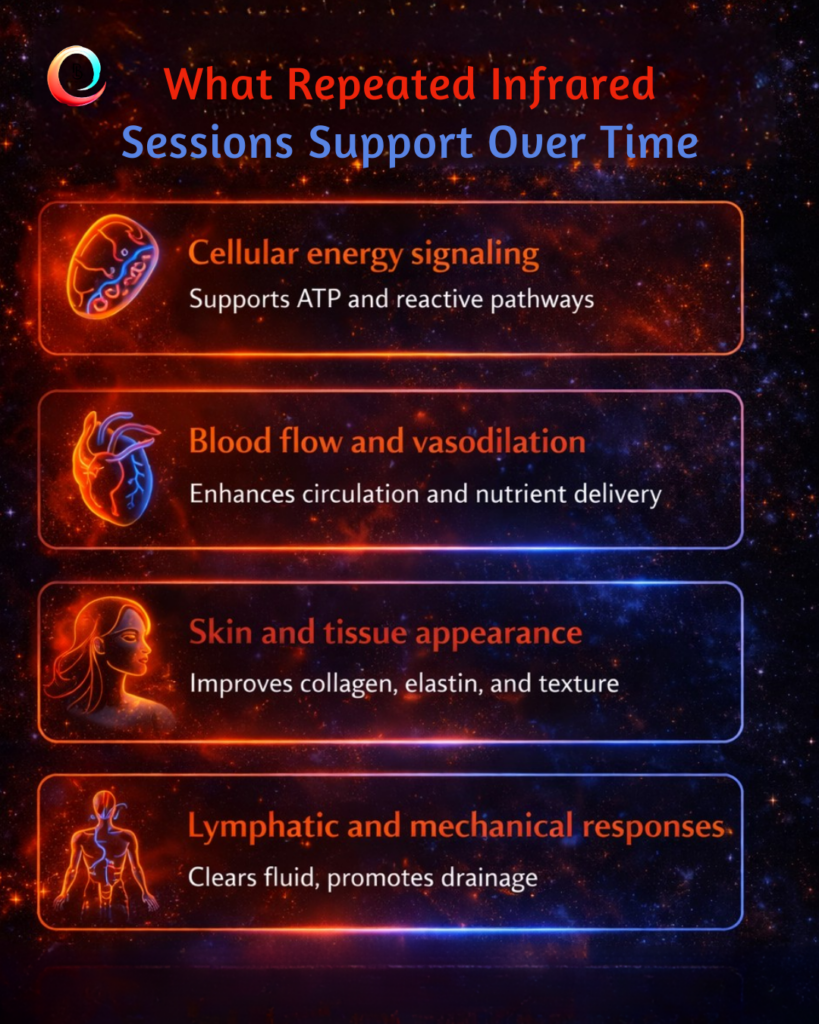
Infrared and red light therapy work by triggering specific molecular and cellular changes that build up with repetition. Several key mechanisms and studies help explain why your routine should be consistent.
- Mitochondria and energy production: Red and near infrared light can stimulate mitochondrial enzymes, improving cellular energy output. In brain photobiomodulation studies, 2 to 5 sessions per week for 2 to 12 weeks improved metrics such as cognitive function, mood, and cerebral blood flow, showing that repeated dosing, not isolated sessions, is needed for meaningful change (Salehpour et al., 2018).
- Vasodilation and circulation: Infrared and red light promote nitric oxide release and local vasodilation, boosting blood flow. An in vivo photobiomodulation study using 660 nanometer red light showed that short, repeated exposures consistently increased local microvascular blood flow and nitric oxide related markers without adverse effects (Keszler et al., 2022). Additional work with near infrared II has demonstrated increased nitric oxide bioavailability through endothelial nitric oxide synthase pathways after repeated light exposures (Zupin et al., 2022).
- Skin, collagen, and firmness: Red light based protocols for skin and cosmetic goals are nearly always structured as series, not single visits. A recent mini review on red light and skin cells concluded that wavelengths in the 600 to 700 nanometer range can increase collagen production, enhance fibroblast function, and rebalance oxidative stress when delivered in repeated, well dosed sessions (Herrera et al., 2024). Reviews of low level laser therapy for fat reduction similarly describe multi session protocols leading to measurable changes in body contour (Avci et al., 2013).
- Lymphatic flow and tissue remodeling: Mechanical and lymphatic techniques are also dose dependent. In women with cellulite, several weeks of regular mechanical massage, manual lymphatic drainage, or connective tissue manipulation reduced thigh circumference and regional fat thickness, reinforcing the importance of a multiweek schedule (Tunay et al., 2010).
- Pain and systemic wellness: Repeated heat therapy has been shown to improve pain and function. In the dry sauna trial for chronic low back pain, 10 sessions over two weeks led to significant improvements in pain and disability indices and a high rate of good or excellent patient satisfaction, supporting structured series rather than sporadic visits (Kim et al., 2019).
All of these findings point in the same direction. Infrared and red light based therapies are dose dependent. The total benefit depends on how long each session is and how often you do it. A well structured routine, not sporadic visits, is where the real transformation happens.
Combo Is King: Doubling Up Modalities to Amplify Results
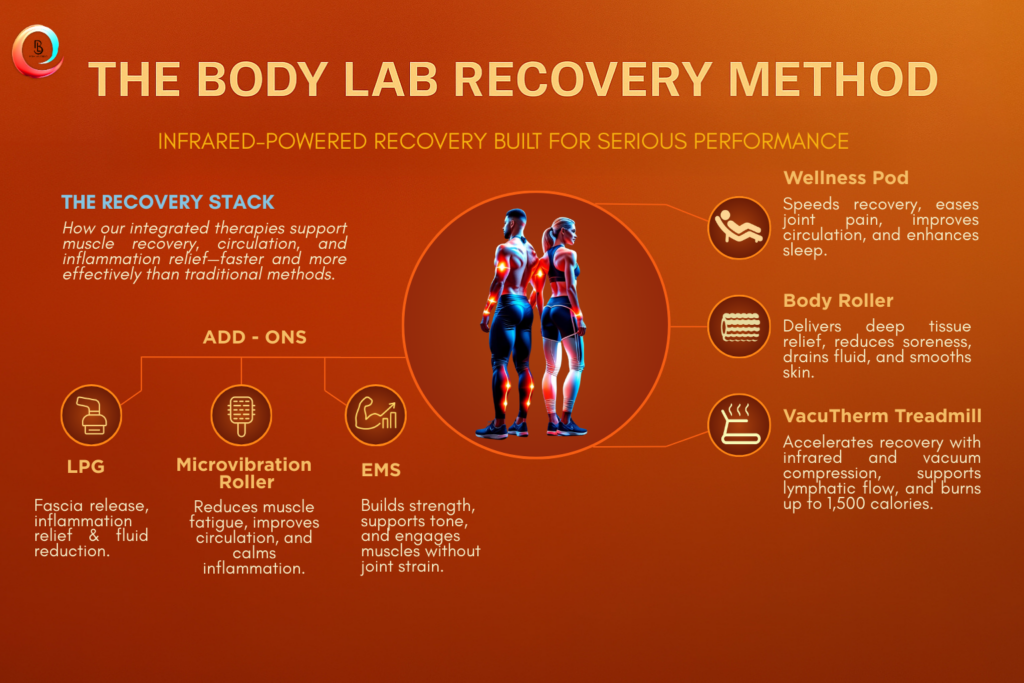
Many clients at Body Lab Studio choose to combine different modalities across the week rather than relying on a single service. This approach allows each session to serve a specific purpose while supporting overall wellness.
Infrared Plus POLY Red Light Therapy
Whole body infrared sessions provide general relaxation and circulation support, while localized red light sessions focus on specific areas such as the face, neck, or joints. Research reviews of photobiomodulation describe protocols that combine broader exposure with targeted treatments across multiple weeks.
Infrared Plus Lymphatic Focused Treatments
Infrared heat can support relaxation and circulation, while Body Rollers and LPG Endermologie provide mechanical stimulation that encourages fluid movement and tissue mobilization. Clinical studies of mechanical lymphatic techniques demonstrate that regular use over several weeks is associated with changes in tissue measurements.
Infrared Plus EMS and RF Sculpting
EMS and RF technologies are designed for cosmetic goals such as muscle conditioning and skin firmness. These treatments are typically delivered as short series. At Body Lab Studio, clients often alternate these sessions with infrared wellness days rather than stacking them together. This sequencing supports comfort and allows each modality to be used as intended.
Bundled packages and memberships are designed to make this type of structured scheduling easier. Rather than guessing how to combine services, clients can follow a guided plan that balances frequency and recovery.
The Body Lab Studio Difference: Guided and Structured for Success
Body Lab Studio in Myrtle Beach focuses on translating current wellness research into routines that are realistic and safe. The goal is not to promise outcomes, but to provide structure, education, and support.
When working with Body Lab Studio, clients can expect:
- Personalized planning based on goals, tolerance, and lifestyle
- Guided scheduling so sessions are spaced appropriately
- Attention to comfort and safety, including hydration reminders and session monitoring
- Adjustments over time as needs change
Session lengths and frequencies are selected to align with commonly used wellness protocols. Staff are trained to help clients understand how to pace their routine rather than pushing for excessive use.
Why Choose Body Lab Studio
- We don’t rely on single tools. We craft intelligent, synergistic protocols tailored to your goals.
Book your first Infrared + POLY Red Light session today and experience a science-backed reset that fits your life.
Frequently Asked Questions About Infrared Wellness
1. Is It Possible to Overdo Infrared Sessions?
For most healthy adults, infrared and red light therapies are generally well tolerated when used at appropriate durations and frequencies. Many research protocols use up to three to five sessions per week for limited periods. At Body Lab Studio, most clients are guided toward two to four supervised sessions per week depending on modality mix and individual response. Overuse is uncommon when sessions are spaced appropriately and hydration is maintained.
2. When Is It Okay to Do Infrared Less Often?
Once a maintenance phase is reached, many clients feel comfortable with one session per week. This can help sustain the way they feel without requiring frequent visits. Observational data on heat based wellness practices suggest that moderate regular use is more beneficial than sporadic exposure.
3. Can I Combine Infrared with Other Wellness Practices?
Yes. Infrared wellness is often most effective when paired with good hydration, balanced nutrition, regular movement, and adequate sleep. Improved relaxation and circulation can make other healthy habits feel more accessible. Studies of heat exposure often examine its use alongside exercise rather than as a standalone practice.
4. How Will I Know If It Is Working?
Responses vary. Some people report feeling more relaxed or energized within a few weeks when they are consistent. Others notice gradual changes in recovery, sleep quality, or skin appearance over time. There is no guaranteed timeline, and results depend on frequency, baseline health, and overall lifestyle.
Book a Consult to Build Your Personalized Infrared Wellness Routine
You do not need to guess how often to come or which services to choose. At Body Lab Studio in Myrtle Beach, consultations are designed to help you build a structured, realistic routine that fits your goals and schedule.
Whether you are interested in infrared wellness pods, infrared fitness, red light therapy, lymphatic focused treatments, or body sculpting services, the focus is on creating a plan you can follow with confidence. Sessions are guided, monitored, and adjusted over time so your routine evolves with you.
Your infrared wellness routine should feel supportive, not stressful. With a structured approach and professional guidance, consistency becomes easier and wellness becomes sustainable.
References (APA Style)
Ahokas, E. K., et al. (2025). Effects of repeated use of post exercise infrared sauna on neuromuscular performance and body composition in physically active adults. Frontiers in Sports and Active Living, 7, 1462901. In this randomized controlled training study, 40 physically active adults were assigned to add a brief 10 minute post exercise infrared sauna session or not after workouts, three times per week for 12 weeks. The infrared sauna group showed safe use, small but specific gains in certain neuromuscular performance metrics, and favorable body composition changes, supporting the feasibility of repeated post workout infrared use in regular training routines. https://www.frontiersin.org/journals/sports-and-active-living/articles/10.3389/fspor.2025.1462901/full
Herrera, M. A., Ribas, A. P., da Costa, P. E., & Baptista, M. S. (2024). Red light photons on skin cells and the mechanism of photobiomodulation. Frontiers in Photonics, 5, 1460722. This mini review analyzed mechanistic and preclinical studies on how red light in the 600 to 700 nanometer range interacts with skin cells over repeated exposures, highlighting increased collagen production, improved fibroblast activity, and modulation of oxidative stress, and concluded that clinically meaningful effects depend on adequate dose and repeated sessions over time. https://www.frontiersin.org/journals/photonics/articles/10.3389/fphot.2024.1460722/full
Keszler, A., Lindemer, B, Broeckel, G., Weihrauch, D., Gao, Y., & Lohr, N. L. (2022). In vivo characterization of a red light activated vasodilation: A photobiomodulation study. Frontiers in Physiology, 13, 880158. In this in vivo study in humans and animals, 660 nanometer red light was applied for short durations to skin, repeated across sessions, and resulted in reliable increases in local microvascular blood flow and nitric oxide related markers without adverse effects, demonstrating that red light can repeatedly and safely enhance circulation in a way that supports infrared and red light protocols. https://www.frontiersin.org/journals/physiology/articles/10.3389/fphys.2022.880158/full
Kim, K. E., et al. (2019). Dry sauna therapy is beneficial for patients with chronic low back pain. Anesthesia and Pain Medicine, 14(4), 474–479. In this clinical trial, 37 patients with chronic low back pain received 10 sessions of dry sauna therapy over two weeks in addition to conventional care. Pain and Oswestry disability scores improved significantly after the multi session sauna program, with 70 percent of patients rating outcomes as good or excellent and no serious side effects, supporting repeated, supervised heat sessions as a safe adjunct for chronic pain. https://synapse.koreamed.org/articles/1158487
Laukkanen, T., Laukkanen, J. A., & Kunutsor, S. K. (2018). Cardiovascular and other health benefits of sauna bathing: A review of the evidence. Mayo Clinic Proceedings, 93(8), 1111–1121. This narrative review summarized prospective cohort and clinical data from Finnish sauna users, with sample sizes in the thousands and follow up up to 20 years, showing that individuals who used a sauna 4 to 7 times per week for 10 to 20 minute sessions had lower rates of cardiovascular disease, dementia, and all cause mortality than those with 1 weekly session, highlighting the importance of frequent, long term heat exposure as a wellness practice. https://pubmed.ncbi.nlm.nih.gov/30077204
Mero, A., Tornberg, J., Mäntykoski, M., & Puurtinen, R. (2015). Effects of far infrared sauna bathing on recovery from strength and endurance training sessions in men. SpringerPlus, 4, 321. Ten healthy men performed standardized strength and endurance exercise tests on separate days, followed by either 30 minutes of far infrared sauna bathing at 35 to 50 degrees Celsius or passive seated recovery, repeated over several sessions. Far infrared sauna use was safe, and recovery in some neuromuscular measures improved more after sauna than control, supporting 30 minute far infrared sessions as a useful, repeatable post training tool. https://springerplus.springeropen.com/articles/10.1186/s40064-015-1093-5
Salehpour, F., et al. (2018). Brain photobiomodulation therapy: A narrative review. Journal of Cerebral Blood Flow and Metabolism, 38(2), 283–297. This narrative review compiled animal and human studies of red and near infrared photobiomodulation to the head, where most human trials delivered 2 to 5 sessions per week for 2 to 12 weeks, each session lasting 10 to 30 minutes. Across these small clinical trials, repeated photobiomodulation improved cognitive performance, mood, and cerebral blood flow, reinforcing that cumulative, multiweek dosing is required for clinical benefits. https://pmc.ncbi.nlm.nih.gov/articles/PMC6041198
Samuels, J. B., & Leeman, S. (2022). Radiofrequency heating and high intensity focused electromagnetic treatment delivered simultaneously: The first sham controlled randomized trial. Plastic and Reconstructive Surgery, 149(5), 893–900. In this sham controlled trial, 72 adults received four combined RF and high intensity focused electromagnetic treatments or sham treatments in 30 minute sessions over two weeks, with follow up at one and three months. The active treatment group showed statistically significant reductions in abdominal fat thickness and increases in abdominal muscle thickness relative to sham, indicating that a short course of once or twice weekly RF and EMS style sessions can produce durable body contour changes. https://pmc.ncbi.nlm.nih.gov/articles/PMC9028295
Tunay, V. B., Akbayrak, T., Bakar, Y., Kayihan, H., & Ergun, N. (2010). Effects of mechanical massage, manual lymphatic drainage and connective tissue manipulation techniques on fat mass in women with cellulite. Journal of the European Academy of Dermatology and Venereology, 24(2), 138–142. This randomized clinical trial enrolled 60 women with cellulite and assigned them to one of three groups receiving mechanical massage, manual lymphatic drainage, or connective tissue manipulation multiple times per week over several weeks. All groups experienced statistically significant reductions in thigh circumference and regional subcutaneous fat thickness, demonstrating that repeated mechanical and lymphatic therapies can improve cellulite and body contour over a multiweek schedule. https://pubmed.ncbi.nlm.nih.gov/19627407
Zupin, L., et al. (2022). Near infrared II photobiomodulation augments nitric oxide bioavailability via phosphorylation of endothelial nitric oxide synthase. Nitric Oxide, 125–126, 36–48. In this experimental study, near infrared II light in the 1000 to 1400 nanometer range was applied repeatedly to endothelial cells and animal models, and nitric oxide bioavailability and endothelial nitric oxide synthase phosphorylation were measured. Repeated near infrared sessions increased nitric oxide signaling and vascular related markers, providing a mechanistic basis for improved circulation in photobiomodulation and infrared routines. https://pubmed.ncbi.nlm.nih.gov/35929438