Table of Contents
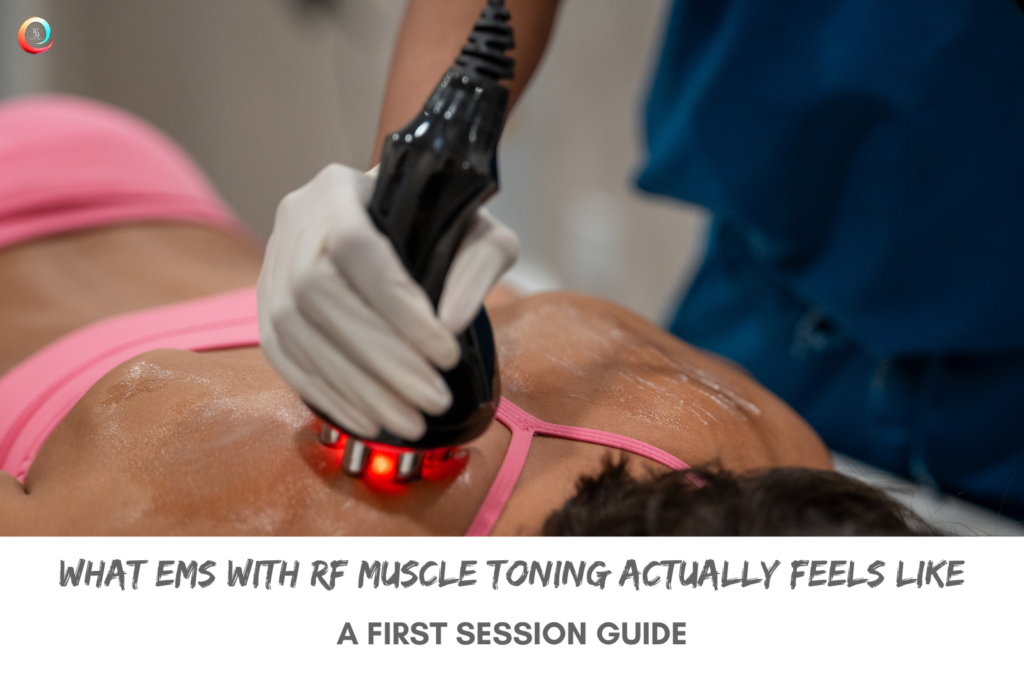
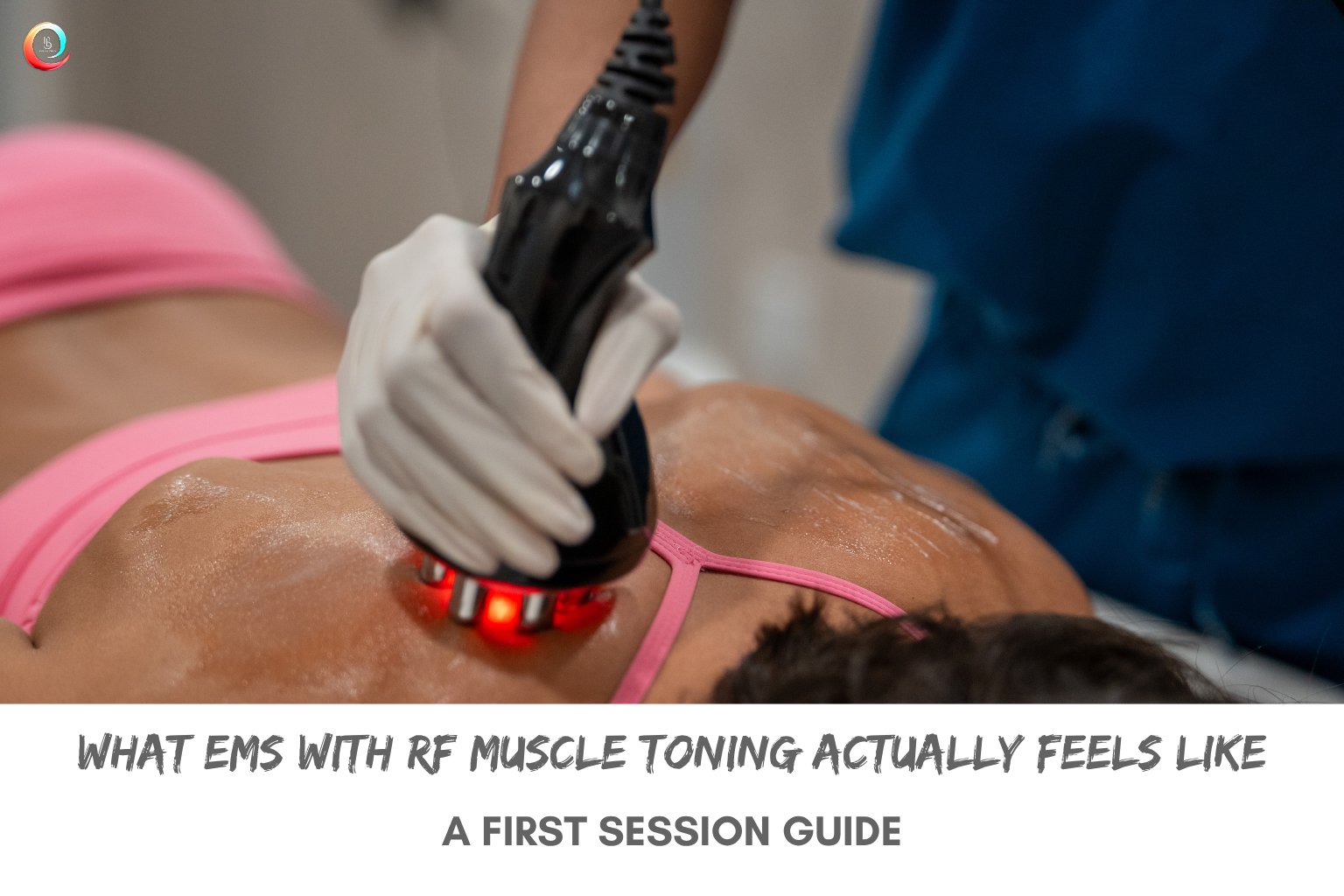
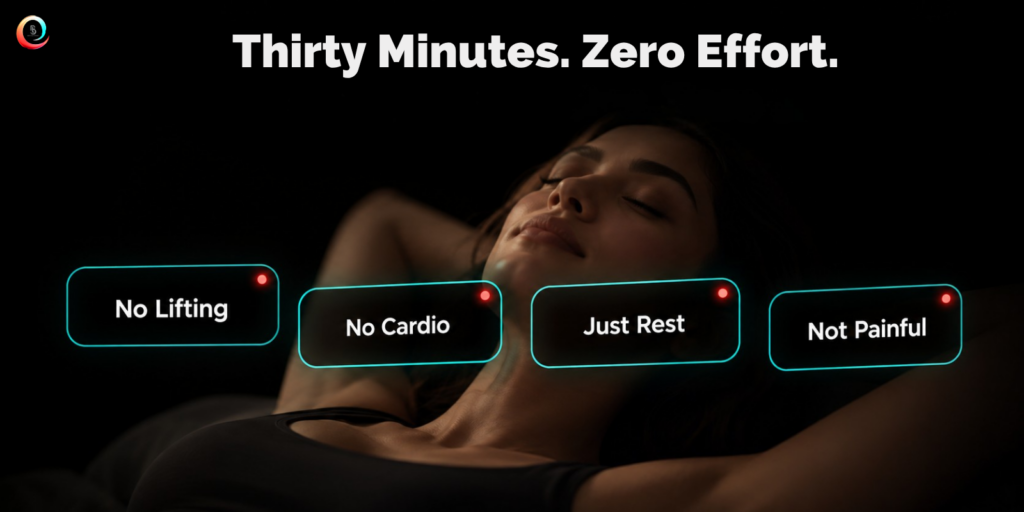
EMS with RF pairs electrical muscle stimulation with radiofrequency energy to trigger involuntary muscle contractions while you rest in a comfortable position. No lifting, no cardio, nothing you need to do on your end. A typical session runs about 30 minutes.
Here’s what a first-timer notices most:
- A rhythmic pulsing or tapping sensation in the targeted muscle group
- Something most people call unusual for the first few minutes
- A feeling that turns normal by the end of the session
- No pain involved at any point
- No fitness level required going in
You don’t do the work here. The device does. Your job is to stay relaxed and enjoy the process.
What EMS with RF Muscle Toning Actually Is
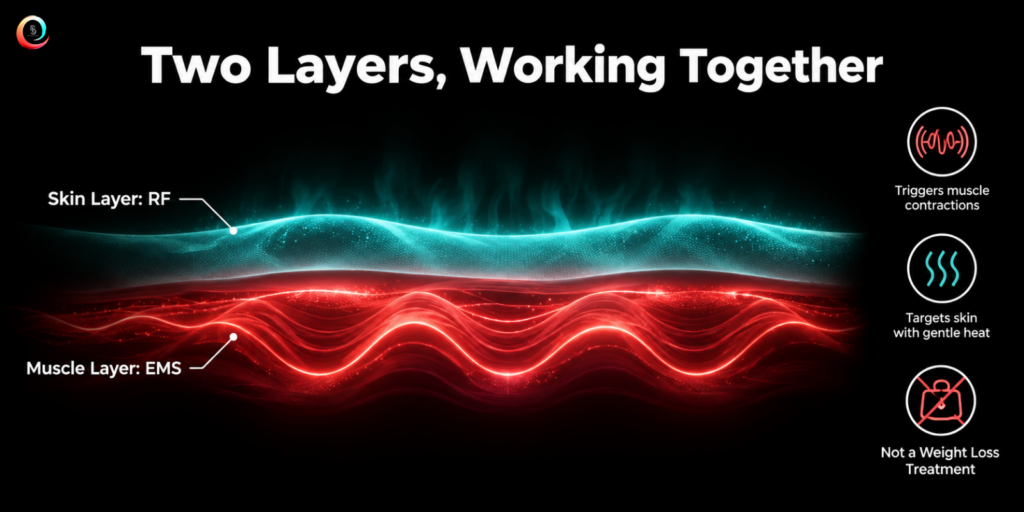
EMS with RF combines two separate technologies working at once. Electrical muscle stimulation makes the muscle contract on its own, without you flexing anything. Radiofrequency works a layer up, targeting the skin and tissue with gentle heat.
Put simply:
- EMS handles the muscle layer, triggering contractions you don’t control
- RF handles the skin layer, using heat rather than electricity
- Together, they work as a muscle toning and skin support session
- Neither one is a weight loss treatment, and neither replaces exercise
If you want the full mechanism explained in depth, we’ve covered that before in a separate post that walks through how the technology works, start to finish. Also, our body shaping services alongside a few other treatments is worth knowing about.
What Happens Before Your EMS with RF Session
Before anything gets switched on, there’s a short setup that makes the rest of the session go smoothly.
What You Wear
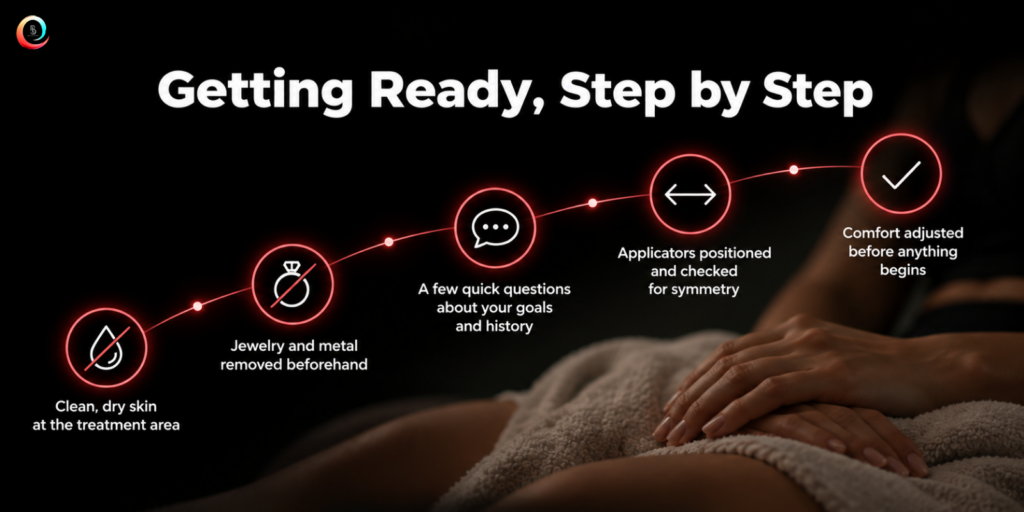
Comfort matters more than any particular outfit. The treatment area needs clean, dry skin, so lotions and oils get skipped that day, and jewelry or metal near the area comes off first. Beyond that, wear whatever lets the team reach the muscle group you’re targeting without a hassle.
What We Ask Before Your First Session
A few quick questions come first:
- Which area you’re hoping to target
- Any relevant health history worth flagging
- What you’re expecting from the session, so nobody’s guessing
- Whether you’ve had any muscle stimulation treatment before
How the Applicators Get Positioned
The device uses paddle-style applicators, secured against the skin with elasticized bands over the muscle group being treated. Placement gets checked and matched on both sides for symmetry, which matters most on areas like the thighs or arms, where even a small shift changes the result. Once everything’s positioned and comfortable, the session begins.
What the EMS + RF Session Feels Like
The First Few Minutes
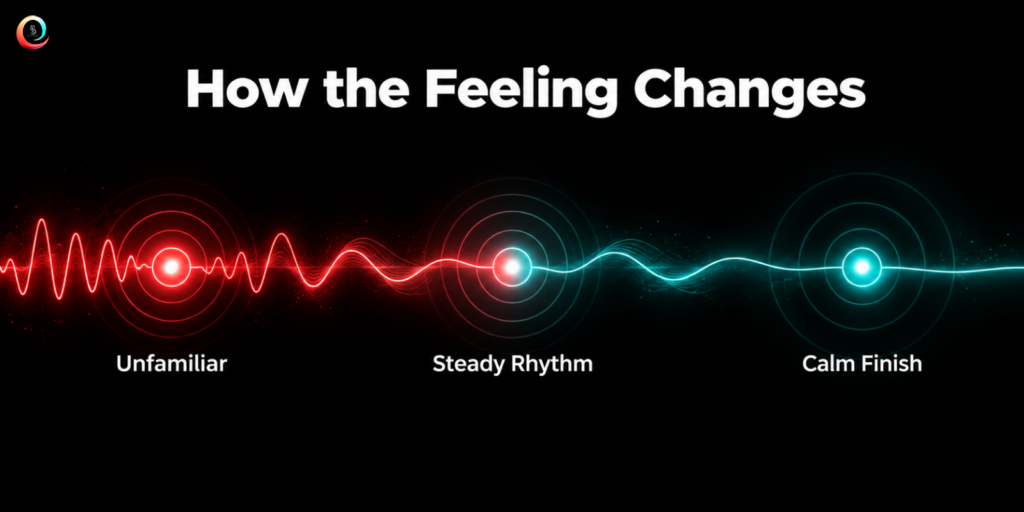
Expect a tapping or pulsing sensation right under the applicators. Some describe it as tingling, others as a light muscle twitch they didn’t expect. It feels strange for the first minute or two, mostly because it’s an unfamiliar kind of contraction, one you’re not initiating yourself.
The Middle of the Session
Intensity stays adjustable throughout. The team starts low and raises the level gradually, checking in as they go rather than cranking things up and hoping for the best. By the middle of the session, most people settle into it, and what felt odd at the start starts to feel more like a rhythm.
Finishing Up
Once the session ends, most people feel fine to walk out and continue their day. Some notice mild, short-lived muscle tiredness afterward, similar to what a light workout leaves behind rather than anything intense or long-lasting. That response varies person to person, and the team will walk you through what to expect for your own session.
What EMS with RF Supports, and What It Doesn't Promise
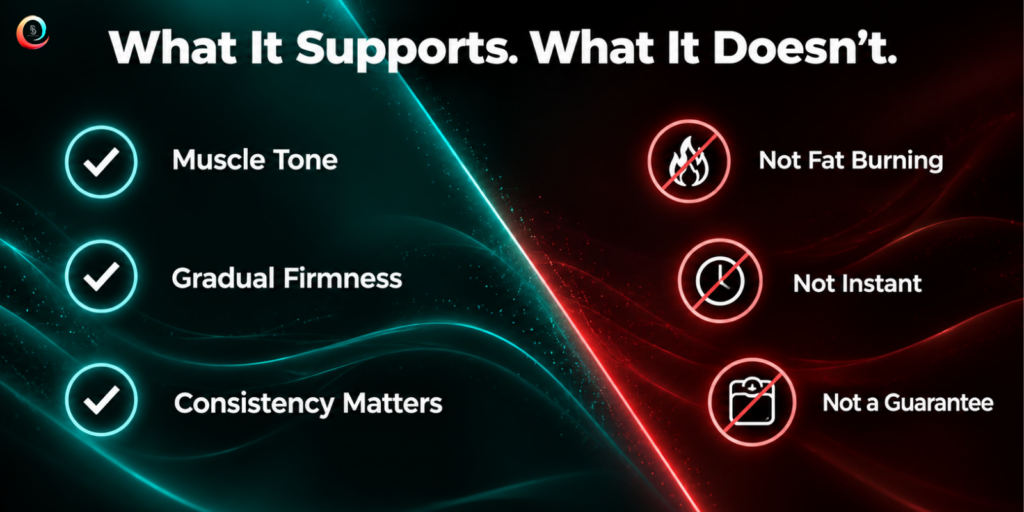
What that actually means:
- It’s designed to work the targeted muscle passively, without voluntary effort
- Many people feel firmer muscle engagement over a series of sessions
- Results depend on consistency, the area treated, and the person
- It pairs well with an active routine, not instead of one
What it does not do:
- It does not burn a set number of calories
- It does not melt fat or replace strength training
- It does not guarantee an exact outcome or timeline
- It is not a cardio substitute of any kind
If you’re weighing what kind of results to expect, this post goes deeper into that conversation. Some clients also pair EMS sessions with recovery treatments, during the same visit or on a different day altogether.
Want the honest picture before you book?
Ask us anything, we'll give you a straight answer, not a sales pitch.
Ask Us AnythingWho It Suits, and Who Should Check With a Doctor First
EMS with RF works well for people who want passive muscle support without adding another workout to their week. It’s not the right fit for everyone, though, and that’s worth being upfront about.
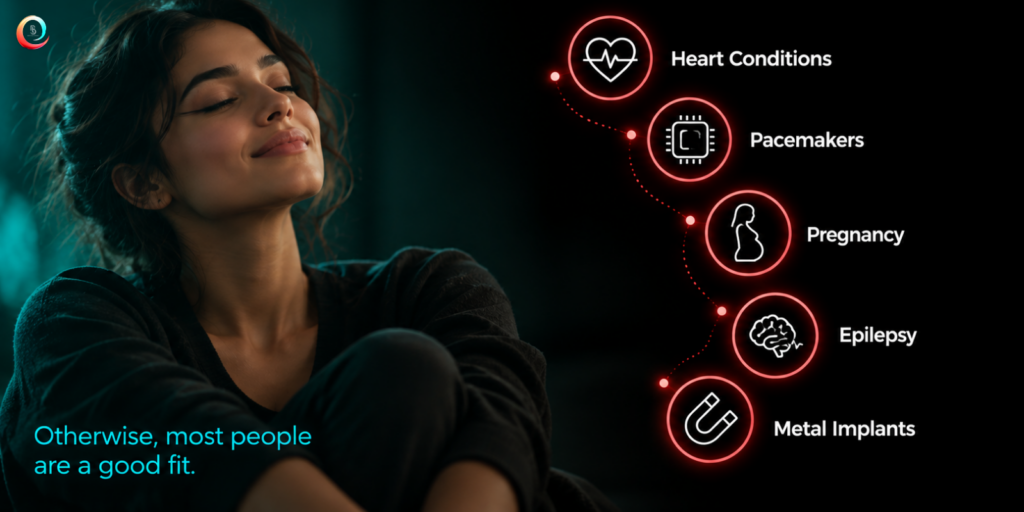
Check with a doctor first if any of these apply:
- You have a pacemaker or another electrical implant
- You have a diagnosed heart condition
- You’re currently pregnant
- You have epilepsy
- You have metal implants near the treatment area
None of this is meant to scare anyone off. It’s a standard safety step, and the team will ask about all of it before your first session anyway.
How EMS with RF Fits Into a Body Lab Session
EMS with RF rarely stands entirely alone. Your goals shape whether the team pairs it with other services on the same visit or across a broader plan.
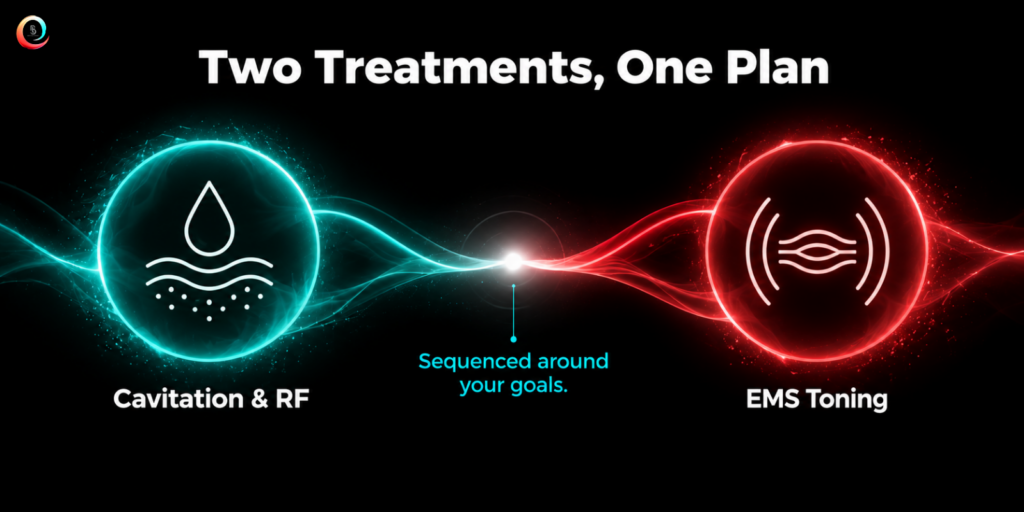
A common pairing looks like this:
- Cavitation and RF work on a different layer entirely
- EMS then adds the muscle toning piece on top
- The two together cover more ground than either alone
- Sequencing gets discussed with you directly, not assumed
For more on how EMS fits into a full toning sequence, this post covers that context in more depth.
See how EMS fits your own routine
Every plan looks a little different. Let's build yours together.
Build My PlanSession Frequency and What to Expect
Frequency depends entirely on the person and the goal. There’s no single number that fits everyone, and anyone promising one isn’t being straight with you.
What tends to matter most:
- Consistency over time beats an occasional session
- A plan takes shape around your own area and goal
- Results are gradual, not immediate or guaranteed
- The team adjusts frequency as your body responds
If you’re brand new to any of this, starting here is the easiest first step before booking anything at all.
Curious what your first session would feel like?
Talk it through with the team first. No pressure, no commitment.
Book A Free ConsultationFrequently Asked Questions
A technology that combines electrical muscle stimulation, which causes the muscle to contract involuntarily, with radiofrequency energy, used to support muscle tone while you rest in a comfortable position.
No. Most people call it an unusual tapping or pulsing sensation, not pain. Intensity stays adjustable throughout the session.
Around 30 minutes, varying with the area being treated.
No. It's designed to support muscle tone alongside a broader routine. It's not a replacement for strength training or cardiovascular exercise, nor is it a weight loss treatment.
Anyone with a pacemaker or certain heart conditions, anyone pregnant, anyone with epilepsy, or anyone with metal implants near the treatment area should check with a doctor first.
Body Lab Studio offers EMS with RF sessions within its Body Shaping and Contouring services.
References
- MedicalNewsToday, “Electrical Muscle Stimulation,” medically reviewed by Gregory Minnis, DPT, updated January 2026: https://www.medicalnewstoday.com/articles/electrical-muscle-stimulation
- Health Science Reports, peer-reviewed review on radiofrequency technology in skin rejuvenation, December 2025: https://pmc.ncbi.nlm.nih.gov/articles/PMC12743727/