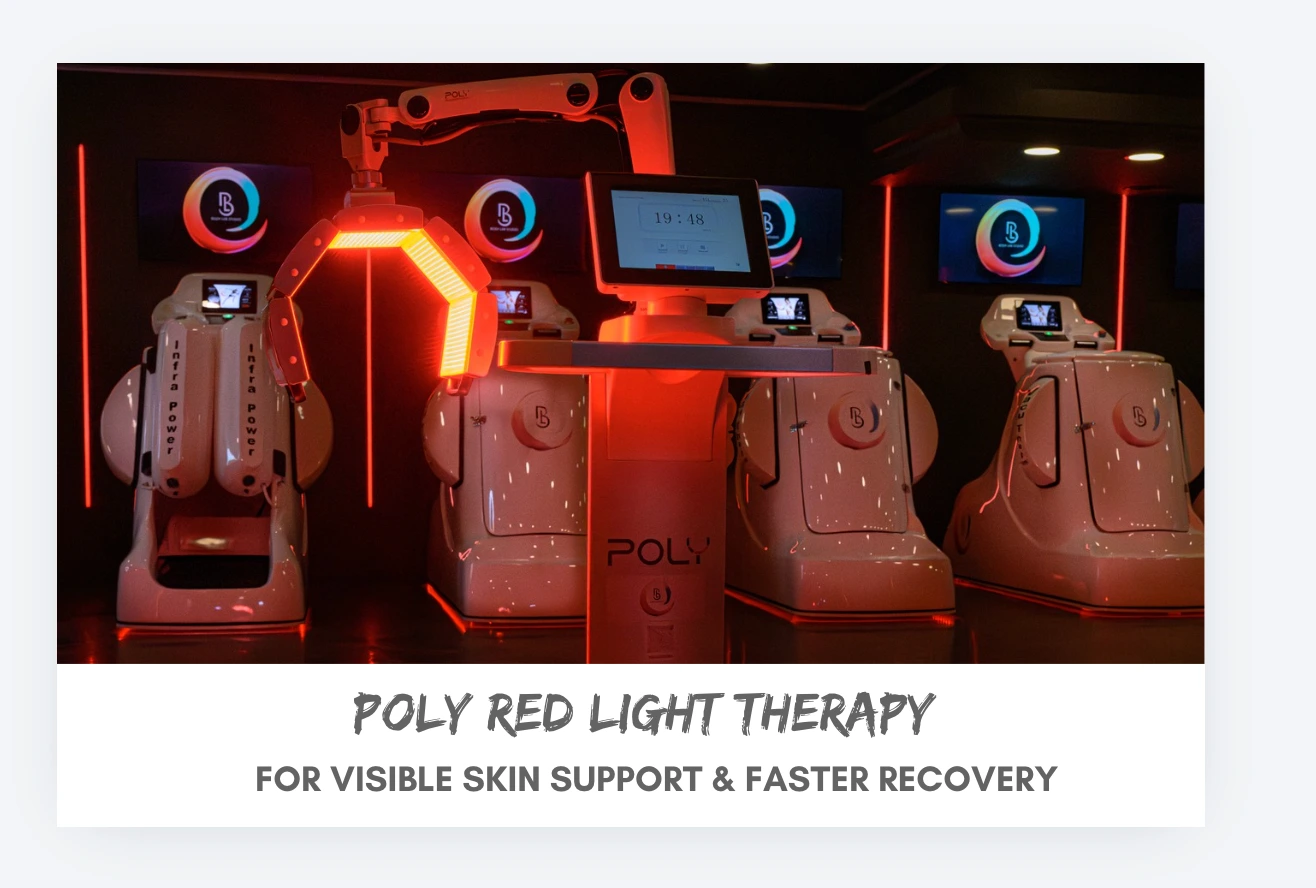
Looking for Visible Results Without the Hype?
Many beauty and wellness technologies promise dramatic, all-encompassing results, but few are grounded in clearly defined clinical use parameters and safety standards. At Body Lab Studio, we focus on technologies that are evidence-informed, non-invasive, and appropriate for professional wellness and aesthetic environments.
POLY Red Light Therapy is an FDA-cleared LED light therapy device that we use to support:
- Visible skin quality and appearance
- Localized comfort and post-activity recovery support
- Overall tissue resilience within treated areas
Our approach prioritizes realistic expectations, proper clinical context, and consistency rather than exaggerated claims about systemic healing, detoxification, or guaranteed cellular transformation (FDA, LED device guidance; Hamblin et al., 2018).
What Is POLY Red Light Therapy?
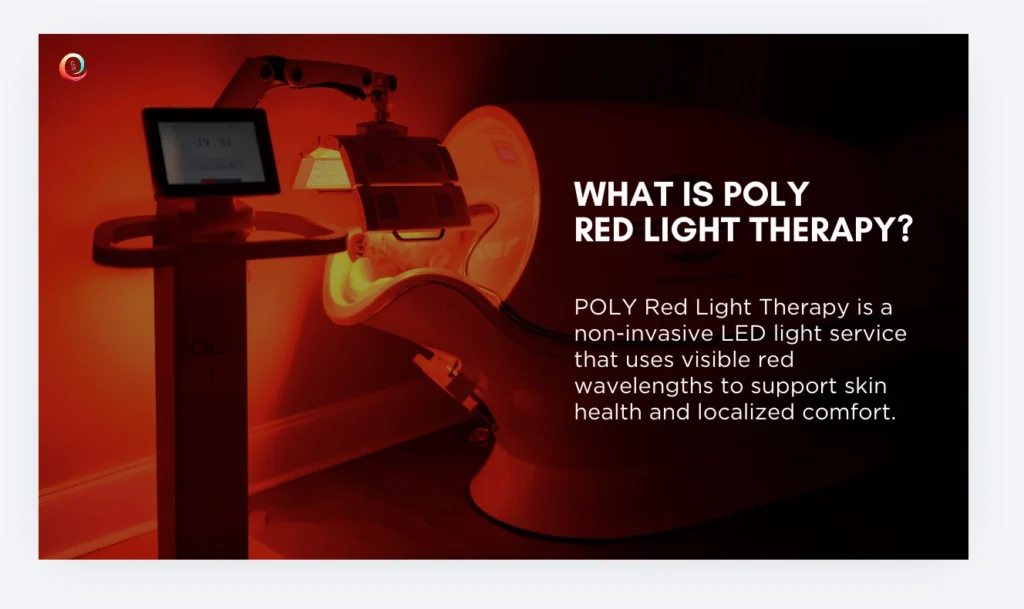
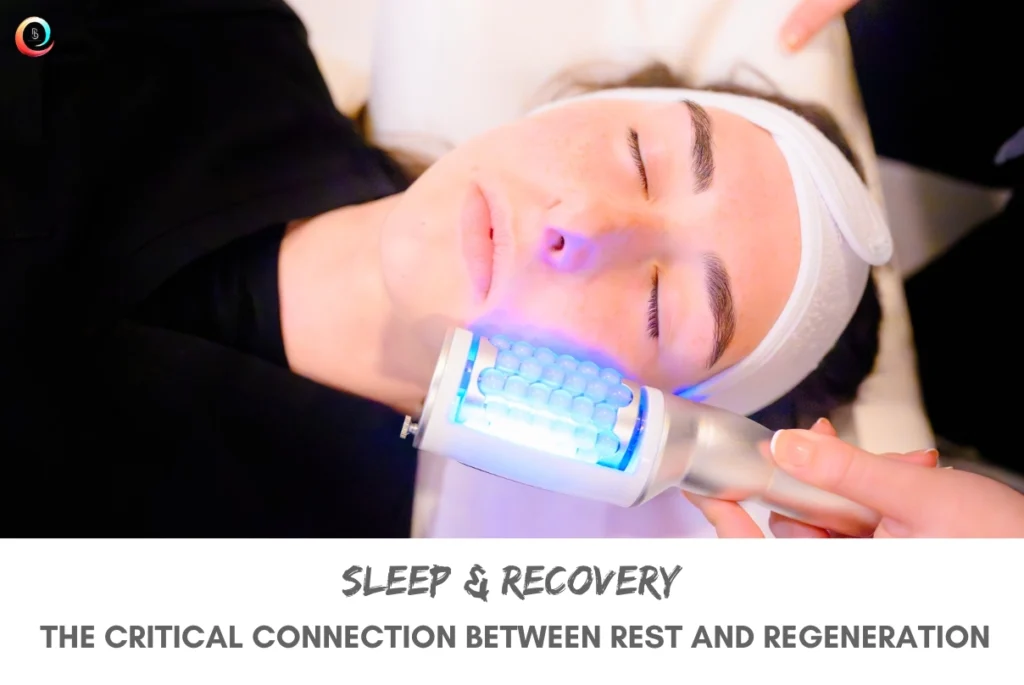
POLY Red Light Therapy uses visible red LED wavelengths delivered through professional-grade light panels designed to provide consistent, even exposure across the skin and superficial tissues.
POLY devices are FDA-cleared LED light therapy devices for specific, localized applications related primarily to skin appearance and tissue comfort. FDA clearance applies to the device and its intended use and should not be interpreted as approval for broad systemic, neurological, metabolic, or disease-related treatment (U.S. FDA, General Wellness & LED Device Classifications).
Compared to consumer LED masks or at-home red light bulbs, POLY systems are designed for:
- Controlled light output and protocol consistency
- Coverage of larger treatment areas
- Supervised use in a professional wellness setting
Sessions typically last approximately 15 to 20 minutes and are commonly performed several times per week over a structured plan, with frequency and duration guided by practitioner recommendation rather than fixed guarantees (Avci et al., 2013; Hamblin, 2017).
How POLY Red Light Therapy Works
The red light used in POLY treatments is absorbed by light-responsive molecules within skin and muscle cells, including mitochondrial chromophores such as cytochrome c oxidase. This interaction is commonly referred to as photobiomodulation (Hamblin, 2017; Karu, 2008).
Research suggests that, when delivered at appropriate wavelengths and exposure levels, red light may:
- Influence localized cellular signaling pathways
- Support normal mitochondrial activity in treated tissues
- Modulate oxidative and inflammatory signaling involved in tissue response
Photobiomodulation follows a biphasic dose response, meaning moderate, appropriately timed exposure tends to be more effective than excessive duration or frequency (Huang et al., 2009). For this reason, POLY treatment protocols emphasize consistency and recovery time rather than longer or more frequent sessions.
At Body Lab Studio, POLY is used to support localized skin appearance and recovery-focused wellness goals, consistent with professional aesthetic and non-medical wellness applications.
POLY Red Light Therapy Benefits
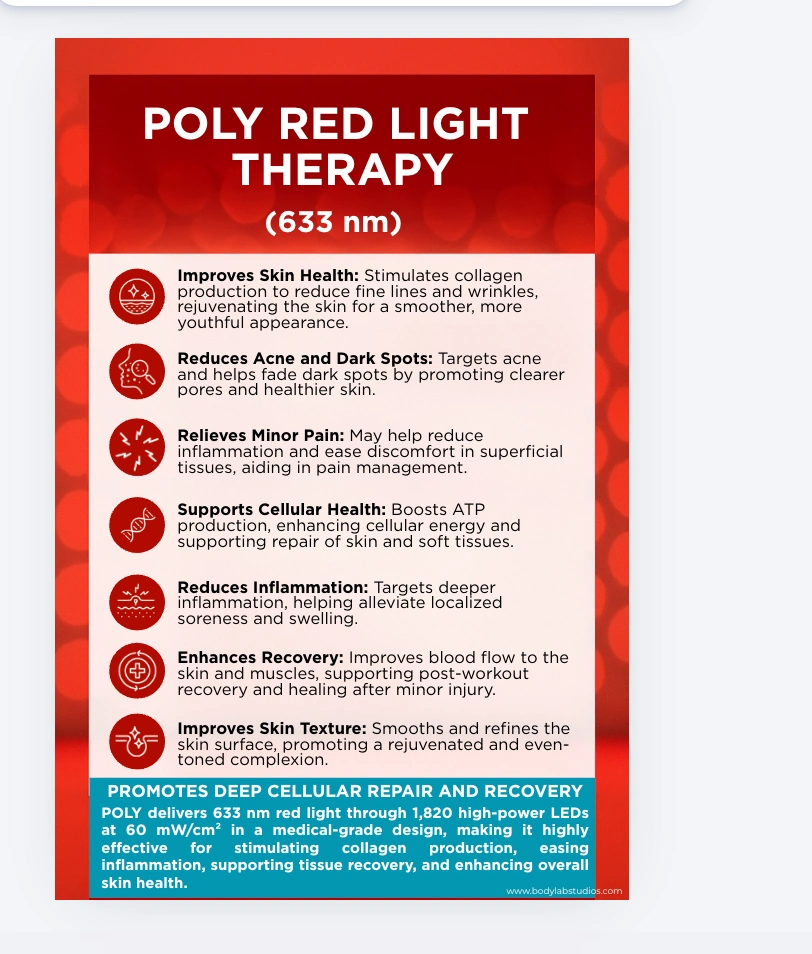
1. FDA-Cleared LED Support for Skin Quality and Wrinkle Appearance
Red LED photobiomodulation is well studied for cosmetic skin applications, particularly in relation to skin texture, tone, and the appearance of fine lines when used consistently over time.
Clinical studies on red LED light therapy devices have demonstrated improvements in:
- The appearance of fine lines and wrinkles, particularly in facial and periorbital areas
- Skin smoothness, firmness, and elasticity
- Overall skin tone and radiance
These effects are believed to be related to fibroblast stimulation, collagen modulation, and improved microcirculation in treated skin (Barolet & Boucher, 2010; Lee et al., 2007).
With consistent use, POLY clients may notice smoother-looking skin, improved tone, and gradual visible refinement over several weeks. Because collagen remodeling is a slow biological process, results develop progressively rather than after a single session.
2. Support for Localized Inflammation and Swelling Appearance
Photobiomodulation research indicates that red light can influence local cellular signaling and circulation in treated areas, which may affect how tissue responds to stress or activity (Hamblin, 2017).
In a professional wellness setting, this may help support:
- Calmer-looking skin and more even appearance
- Temporary reduction in the appearance of localized puffiness
- Improved comfort in muscles or joints following physical activity
When combined with supportive practices such as hydration, gentle movement, or mechanical lymphatic-supportive techniques, red light therapy may complement a broader wellness approach focused on comfort and circulation rather than medical treatment (Borsa et al., 2013).
3. Muscle Recovery and Post-Activity Comfort
Red light photobiomodulation has been studied in sports and rehabilitation research using a range of devices and protocols. Systematic reviews suggest photobiomodulation may support subjective recovery measures, reduce perceived soreness, and improve post-exercise comfort when appropriately dosed (Leal Junior et al., 2015; Borsa et al., 2013).
At Body Lab Studio, POLY is offered as a supportive recovery-focused wellness modality. It is not a replacement for medical care, physical therapy, injury treatment, or athletic rehabilitation programs.
Research Context vs Wellness Use
Scientific literature on photobiomodulation includes medical lasers, high-powered arrays, and clinical protocols that differ significantly from spa-based LED panel use.
While this research informs how light interacts with tissue:
- Not all photobiomodulation studies apply directly to POLY
- Device type, wavelength, exposure level, and treatment area matter
- FDA clearance applies to specific devices and intended uses, not photobiomodulation as a general concept (U.S. FDA)
At Body Lab Studio, POLY Red Light Therapy is positioned clearly as a non-invasive wellness and aesthetic service focused on visible skin support and localized recovery comfort.
Integrating POLY with Infrared and Lymphatic Services
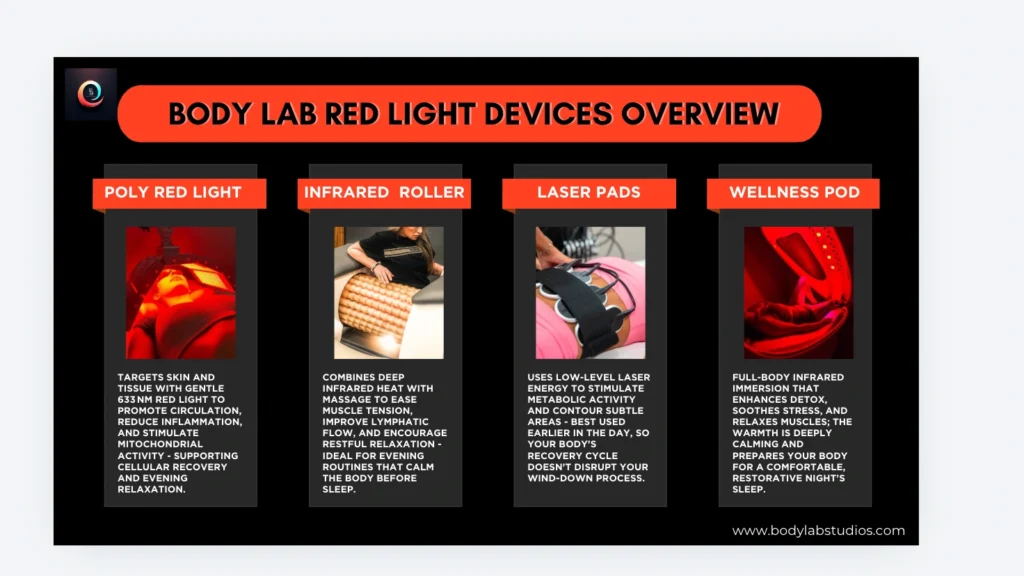
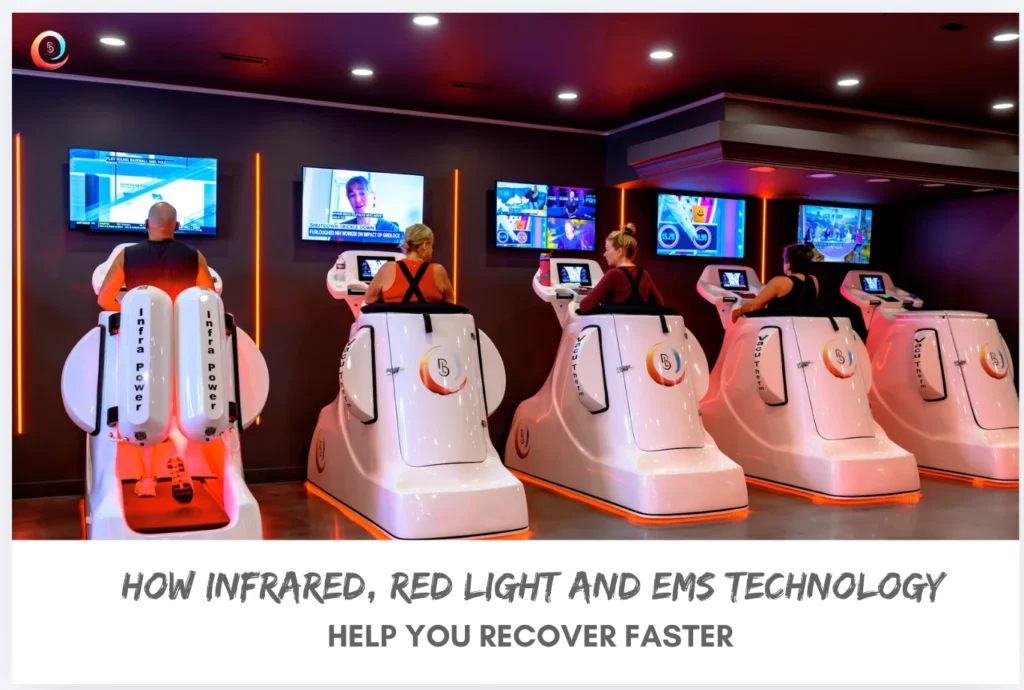
When combined thoughtfully, POLY Red Light Therapy, infrared-based wellness services, and lymphatic-supportive body treatments may help support circulation, tissue comfort, relaxation, and post-stress recovery.
These services are designed to support how the body feels and functions day to day. They are not intended to remove toxins, treat lymphatic disease, or replace medical care (NIH, Lymphatic System Overview).
Safety and FDA Status
POLY Red Light Therapy devices are FDA-cleared LED light therapy devices for specific intended uses related to skin appearance and localized tissue comfort. This clearance reflects evaluation for safety and basic effectiveness within defined parameters.
POLY treatments:
- Use non-ionizing visible red LED light
- Do not use ultraviolet (UV) light
- Are generally well tolerated when used as directed
Temporary warmth or mild redness may occur in some individuals. Red LED therapy is considered suitable across skin tones when used appropriately, with screening for photosensitivity and monitoring response during sessions (Avci et al., 2013).
POLY Red Light Therapy is not intended to diagnose, treat, cure, or prevent disease.
How Often Should You Use POLY Red Light Therapy?
Photobiomodulation is dose-dependent, and benefits accumulate gradually with consistent use.
A common starting approach may include:
- A multi-week plan with reassessment around 4 weeks
- Adjustments based on skin response and comfort
- Maintenance sessions for ongoing support
Your practitioner will help tailor frequency and layering with other services based on individual goals and tolerance (Hamblin, 2017).
Frequently Asked Questions
1. Is POLY Red Light Therapy safe for all skin types?
Yes. Red LED photobiomodulation is generally considered safe for all Fitzpatrick skin types when used as directed. Mild redness or warmth may occur in sensitive individuals (Avci et al., 2013).
2. When will I see results?
Some clients notice brighter or calmer-looking skin within early sessions. More visible changes in texture and firmness typically develop after several weeks of consistent use, reflecting gradual biological remodeling.
Discover Visible Renewal Without Guesswork
At Body Lab Studio, we take a science-guided, practical approach to non-invasive wellness and aesthetics. POLY Red Light Therapy is one of our core technologies because it is FDA-cleared, well studied, and capable of delivering visible support for skin quality and localized recovery when used consistently and appropriately.
Whether you are new to red light therapy or looking for a more thoughtful, evidence-informed approach, our team can help you build a personalized plan that fits your goals and lifestyle.
Schedule a consultation, book a POLY Red Light Therapy session, or explore our RESET Membership to experience Myrtle Beach’s professional, non-invasive skin and recovery services with expert guidance every step of the way.
- Ahokas, E. K., Kyröläinen, H., Häkkinen, K., Walker, S., Mero, A. A., & Ihalainen, J. K. (2023).
A post-exercise infrared sauna session improves recovery of neuromuscular performance and muscle soreness after resistance exercise: A randomized cross-over trial. Frontiers in Sports and Active Living, 5, 1194314.
This randomized cross-over study included 20 resistance-trained adults who completed both an infrared sauna condition and a passive recovery condition following heavy leg exercise, with each protocol evaluated over a 24-hour recovery period. The infrared sauna group used a single 10-minute post-exercise session and showed improved jump performance recovery and reduced muscle soreness compared with passive recovery, supporting infrared-based interventions as a useful recovery aid.
https://pubmed.ncbi.nlm.nih.gov/37398966/ - Mero, A., Tornberg, J., Mäntykoski, M., & Puurtinen, R. (2015).
Effects of far-infrared sauna bathing on recovery from strength and endurance training sessions in men. SpringerPlus, 4, 321.
This study followed 10 healthy male athletes across multiple strength and endurance training sessions combined with far-infrared sauna bathing over a several-week period, with sauna exposures lasting 30 minutes after training. Far-infrared sauna use promoted subjective recovery and muscle relaxation without impairing performance, indicating potential benefits for recovery comfort in active individuals.
https://springerplus.springeropen.com/articles/10.1186/s40064-015-1093-5 - Yoon, Y. S., Park, H. J., & Kang, J. H. (2017).
Efficacy and safety of far infrared radiation in lymphedema treatment. Medicine, 96(7), e6028.
In this clinical study, 64 patients with stage II and III lymphedema received far-infrared radiation therapy combined with conventional treatment, typically five 40-minute sessions per week over four weeks. Limb circumference significantly decreased and quality of life improved, with no serious adverse events reported, suggesting far-infrared radiation can safely support lymphatic drainage and edema reduction in clinical settings.
https://pubmed.ncbi.nlm.nih.gov/28127644/ - Paolillo, F. R., Borghi-Silva, A., Costa, D., & Catai, A. M. (2017).
Infrared light therapy on vascular function: A biophysical approach. AIMS Biophysics, 4(3), 337–348.
This biophysical review draws on multiple human and experimental studies, typically involving 8 to 40 participants per protocol and durations ranging from acute sessions to several weeks, to examine how infrared and near-infrared light influence vascular and endothelial function. The authors report improved microcirculation and nitric oxide–mediated endothelial signaling, supporting the role of infrared light in enhancing blood flow and tissue oxygenation relevant to inflammatory processes.
https://doi.org/10.3934/biophy.2017.3.337 - Di Gennaro, G. L., Kleef, R., & Zanon, P. (2012).
Far infrared emitting plaster in knee osteoarthritis: A single blinded, randomised clinical trial. Reumatismo, 64(6), 388–394.
This single-blinded randomized clinical trial enrolled 60 patients with symptomatic knee osteoarthritis who wore either far-infrared emitting or placebo plasters for 12 hours per day over 10 consecutive days. Participants using the infrared plasters experienced greater pain reduction, improved functional scores, and decreased joint effusion compared with placebo, supporting localized far-infrared application as a non-pharmacological option for joint discomfort associated with inflammation.
https://www.reumatismo.org/reuma/article/view/reumatismo.2012.388 - Kashiwagi, S., Tsukada, K., Suzuki, R., & Nakajima, Y. (2023).
Photobiomodulation and nitric oxide signaling. Redox Biology, 54, 102358.
This mechanistic review compiles data from numerous cell and animal studies spanning hours to weeks of red or near-infrared light exposure to clarify how photobiomodulation influences nitric oxide release and downstream signaling. The authors conclude that red and near-infrared light can trigger nitric oxide release from cytochrome c oxidase and endothelial cells, promoting vasodilation, improved microcirculation, and modulation of oxidative stress relevant to inflammatory regulation.
https://pubmed.ncbi.nlm.nih.gov/36462596/ - Sharma, S., Hamblin, M. R., & de Sousa, M. V. (2023).
Role of opsins and light- or heat-activated transient receptor potential ion channels in infrared therapy. Photodiagnosis and Photodynamic Therapy, 42, 103324.
This narrative review of dozens of preclinical studies involving cell cultures and animal models (typically 6–20 subjects per group) examines how red and near-infrared light, as well as heat, activate opsins and transient receptor potential ion channels. The authors report modulation of calcium signaling, pain pathways, and inflammatory mediators, providing a biological basis for analgesic and anti-inflammatory effects observed in light- and heat-based therapies.
https://www.sciencedirect.com/science/article/pii/S2666469023000015 - Herrera, M. A., Li, S., Wang, Y., & Hamblin, M. R. (2024).
Red-light photons on skin cells and the mechanism of action in phototherapy. Frontiers in Photonics, 5, 1370493.
This review integrates findings from in vitro skin cell experiments, animal models, and early human trials, with individual studies generally including 10 to 50 samples or participants over periods ranging from days to several months. The authors report reduced pro-inflammatory cytokine expression, enhanced collagen production, and accelerated tissue repair, supporting red light’s role in calming skin-level inflammation and promoting recovery when used consistently.
https://www.frontiersin.org/articles/10.3389/fphot.2024.1370493 - Chow, R. T., Johnson, M. I., Lopes-Martins, R. Á. B., & Bjordal, J. M. (2009).
Efficacy of low-level laser therapy in the management of neck pain: A systematic review and meta-analysis of randomized placebo- or active-treatment–controlled trials. The Lancet, 374(9705), 1897–1908.
This meta-analysis pooled data from 16 randomized controlled trials involving 820 patients with acute and chronic neck pain treated with red or near-infrared low-level laser therapy over periods ranging from a single session to 22 weeks. The analysis showed significant pain reduction immediately after treatment and at medium-term follow-up compared with controls, supporting clinically meaningful analgesic and anti-inflammatory effects of photobiomodulation.
https://pubmed.ncbi.nlm.nih.gov/19913903/ - Kavanagh, H., & Piller, N. (2010).
Low-level laser therapy (photobiomodulation therapy) for breast cancer-related lymphedema. Lasers in Medical Science, 25(5), 737–744.
This paper reviews and reports on clinical trials of photobiomodulation therapy for breast cancer–related lymphedema, with individual randomized and controlled studies typically including 20 to 50 participants treated over 4 to 12 weeks. Across these trials, red and near-infrared light therapy reduced limb volume, softened fibrotic tissue, decreased discomfort, and improved mobility, indicating supportive effects on lymphatic drainage and chronic inflammatory swelling.
https://doi.org/10.1007/s10103-009-0712-8