Table of Contents
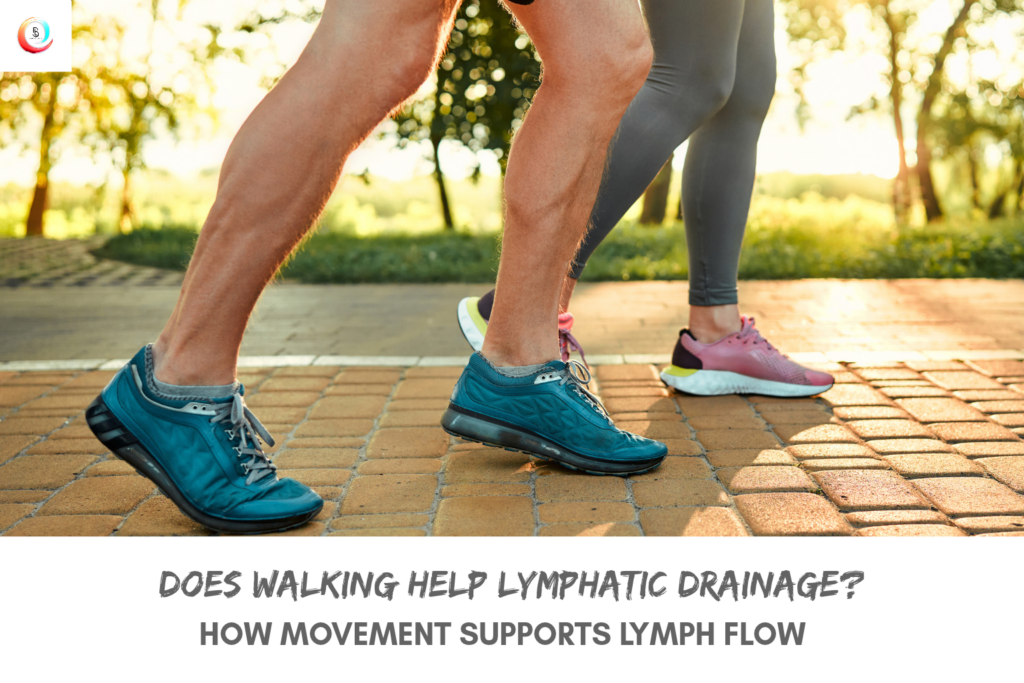
Yes, walking can help lymph move. Unlike your blood, which the heart pumps around the body, lymph moves through several mechanisms working together. Collecting lymphatic vessels contract rhythmically to move fluid forward. Movement adds another mechanism: when your leg muscles contract and relax during walking, they create pressure changes around nearby lymphatic vessels. This makes walking a practical way to support normal lymph flow.
Breathing and hydration play a part too. In Myrtle Beach, the cooler months are a comfortable time to build a walking habit, whether walking outdoors or using an indoor option at Body Lab Studio.
How the Lymphatic System Moves Fluid
Fluid naturally collects in the spaces between your tissues. Tiny lymphatic capillaries gather that excess fluid, which is then called lymph, and it travels through a network of lymphatic vessels before returning to the bloodstream. One-way valves inside the vessels help stop it flowing backward.
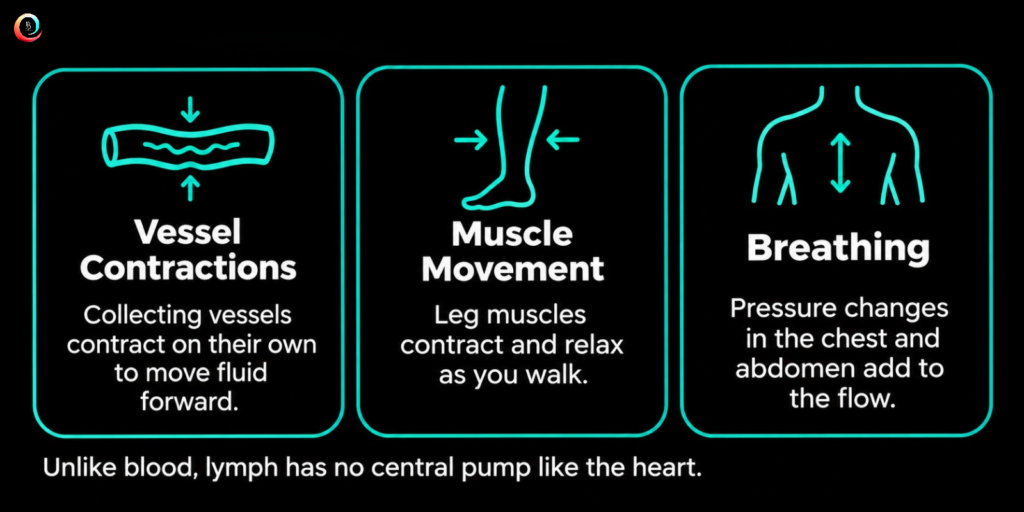
Unlike the cardiovascular system, the lymphatic system does not have a central pump. Instead, collecting vessels contract rhythmically, while surrounding muscle movements and changes in pressure during breathing provide additional forces that help move lymph.
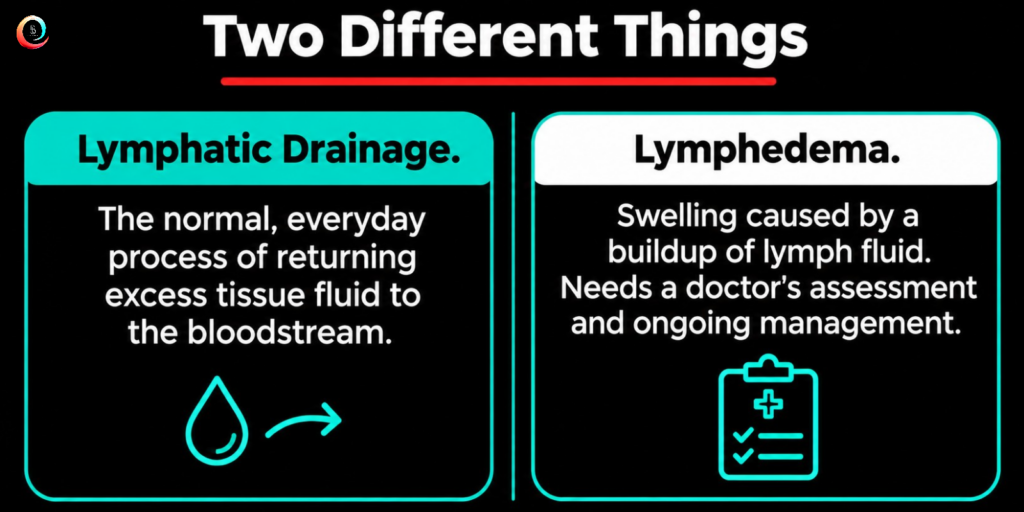
It also helps to separate two ideas. Lymphatic drainage is the normal process of returning excess tissue fluid to the bloodstream. Lymphedema is different: it is swelling caused by a buildup of lymph fluid, and it needs a doctor’s assessment and ongoing management.
Sitting or standing for long periods can contribute to swelling in the legs and ankles, and regular movement breaks are one reason to get up. However, persistent swelling can have several causes, so it should not automatically be put down to poor lymphatic flow.
How Walking Supports Lymph Flow
Several mechanisms help move lymph, and each plays a different role. Walking works mainly through muscle movement, with breathing and hydration supporting it.
How Muscle Movement Helps Lymph Flow
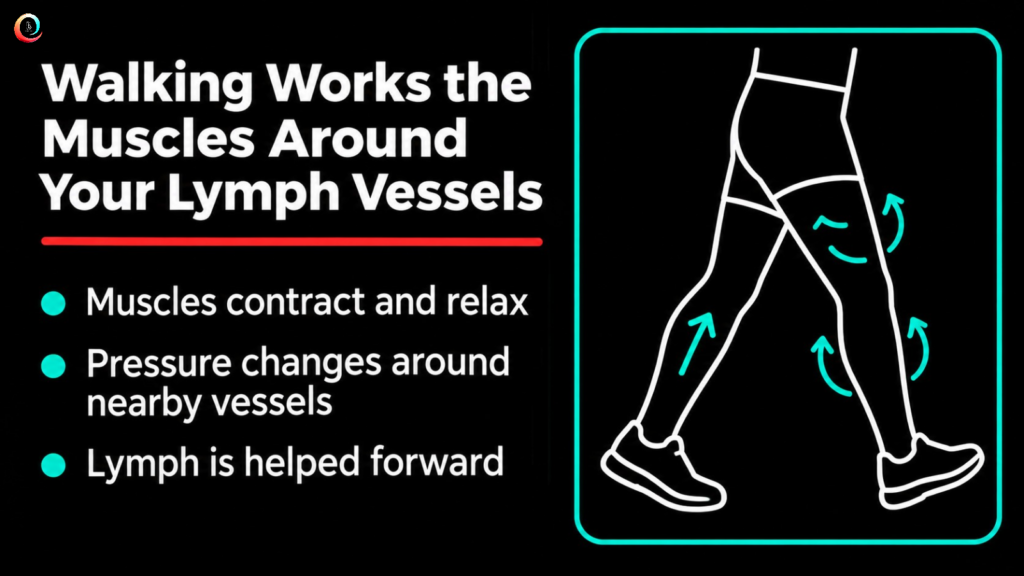
When you walk, your leg muscles repeatedly contract and relax. These movements create pressure changes around nearby lymphatic vessels, helping propel lymph forward alongside the vessels’ own contractions. Taking short walking breaks throughout the day is a practical way to avoid prolonged inactivity.
Taking short walking breaks throughout the day helps maintain regular movement and avoid prolonged sitting.
Deep Breathing Also Helps
Deep breathing changes pressure within the chest and abdomen, which can assist lymph movement through the trunk. Patient guidance from an NHS trust notes that deep breathing exercises can also help the flow of lymph through the body. You do not need a complicated breathing routine. Comfortable deep breathing can sit alongside a broader movement routine, without forcing your breath or counting every one.
Hydration Matters Too
Cleveland Clinic advises staying well hydrated so lymph can move easily through the body. Staying hydrated supports fluid balance, though drinking extra water is not a treatment for swelling.
How Much Walking Is Helpful?
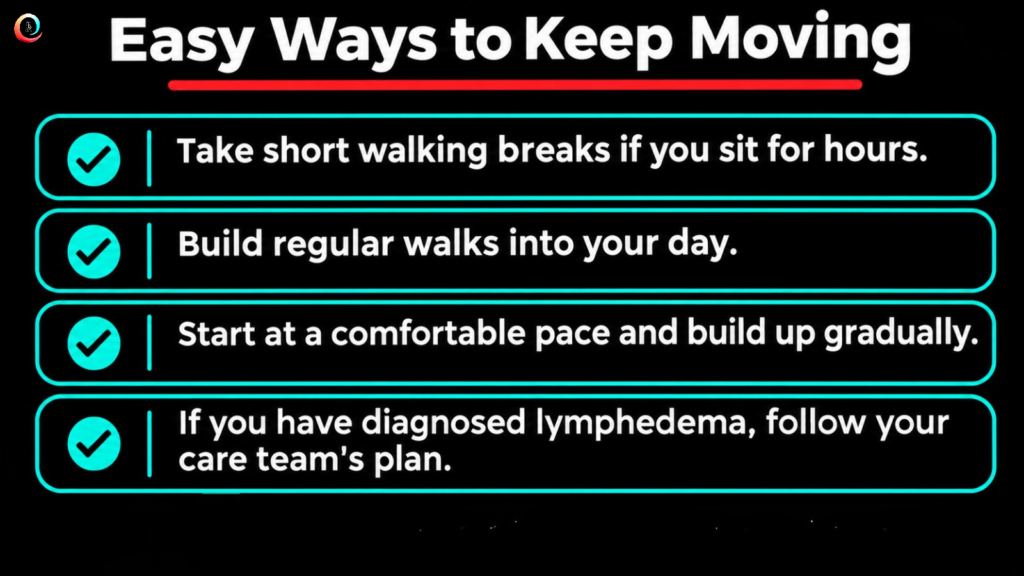
There is no established walking duration specifically for lymphatic drainage. Rather than focusing on a fixed target, build manageable walks and regular movement breaks into your daily routine. A few practical points to keep moving:
- Take short walking breaks if you spend several hours sitting.
- Build regular walking into your daily routine.
- Start at a comfortable pace and increase the duration gradually as your fitness and comfort allow.
- If you have diagnosed lymphedema, follow the exercise plan your care team gives you, because it is tailored to you.
Even short movement breaks can help you avoid staying inactive for long periods. If your legs often feel heavy at the end of the day, read about why your legs feel heavy.
Walking in Myrtle Beach During the Cooler Months

The cooler months bring milder temperatures and fewer summer visitors to Myrtle Beach, which makes it a comfortable time for many locals to walk outdoors. A few places to start:
- The boardwalk, early in the morning: flat, easy and quieter before the day begins.
- The beach: the firmer, packed sand near the waterline can provide a more stable walking surface than softer, dry sand. Check local tide conditions before heading out.
- Market Common: wide sidewalks and a park loop suit an easy, steady pace.
- Your own neighborhood: it counts just as much as anywhere else.
On rainy days, an indoor option may be more convenient.
Indoor Walking Options at Body Lab Studio
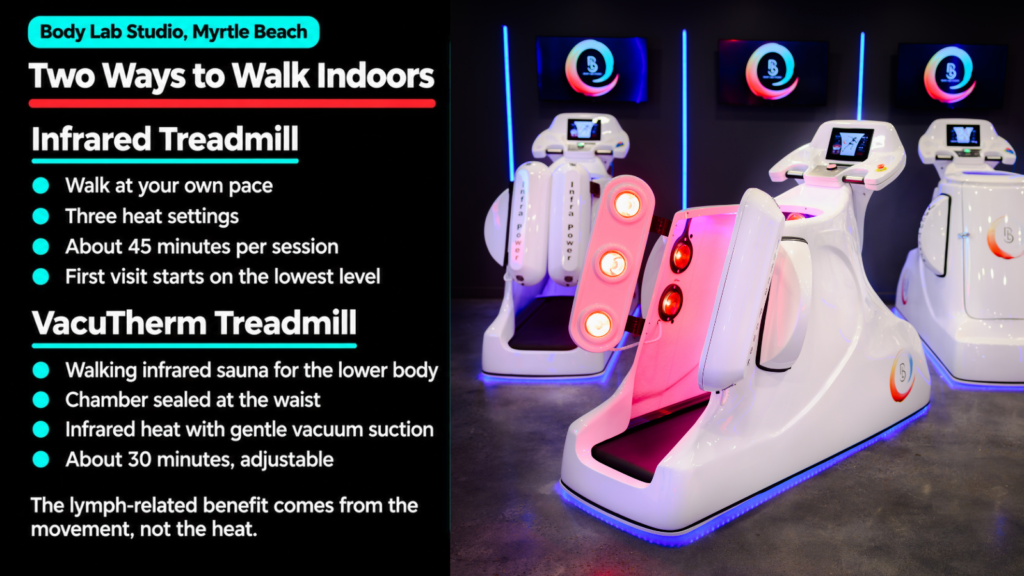
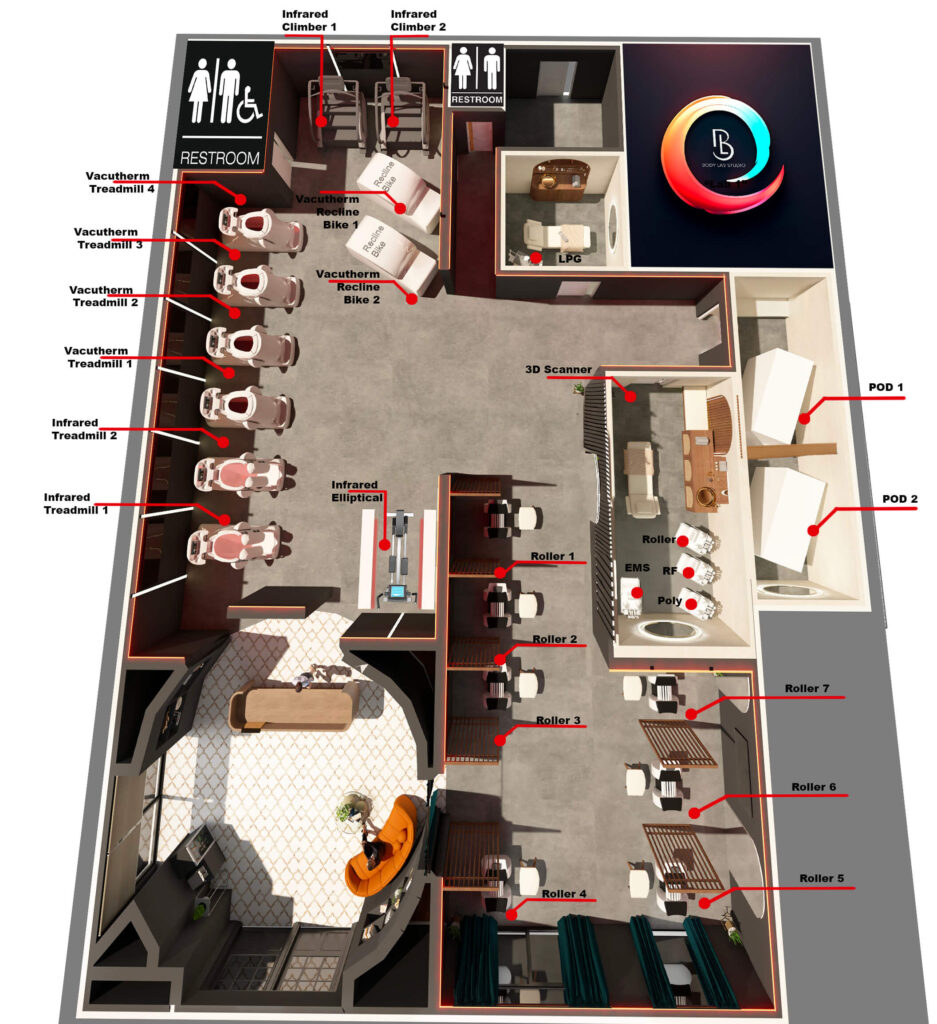
While outdoor walking is a great way to stay active, cooler, colder, or rainy days can make it harder to maintain a routine. Body Lab Studio offers two indoor walking options equipped with infrared technology:
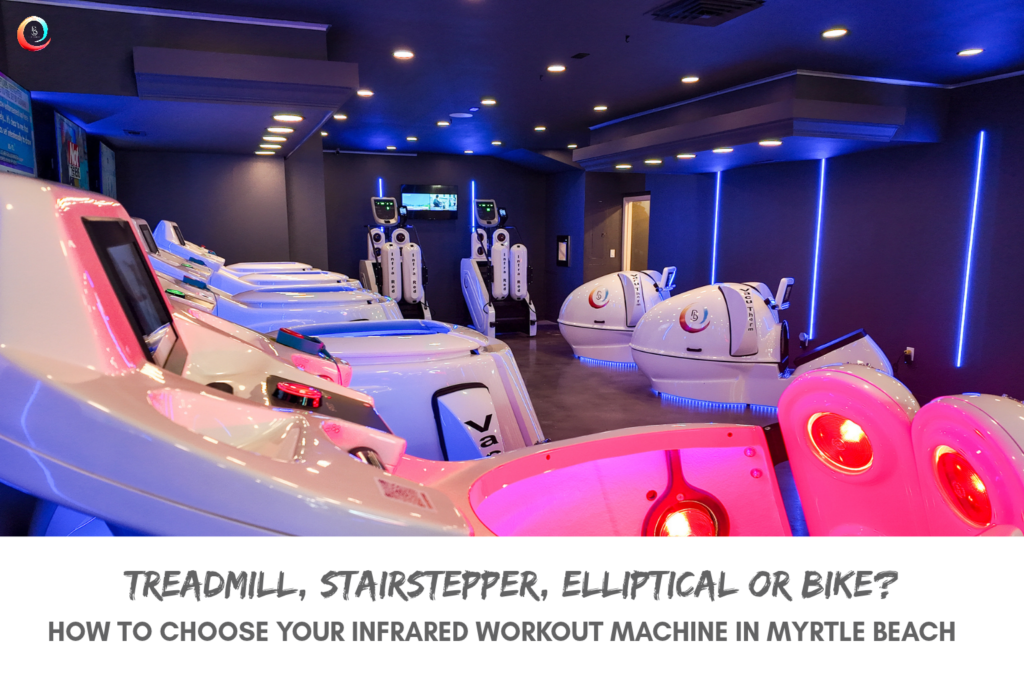
- Infrared Treadmill: Combines standard walking with infrared heat lamps. You can customize your pace and select from three heat settings. Standard sessions run for approximately 45 minutes, with initial visits starting on the lowest heat setting. Learn more about how to build heat tolerance and what to expect during your first session, or read details on the Infrared Treadmill.
- VacuTherm Treadmill: Integrates walking within an enclosed lower-body chamber utilizing infrared heat and gentle vacuum suction. Sessions last around 30 minutes. While leg muscle contractions support natural lymph movement, the chamber feature itself is an equipment enhancement rather than a clinical treatment. Explore the VacuTherm Treadmill for more information.
Please note that lymph-related benefits stem directly from muscle contraction rather than infrared heat, which serves as a supportive session feature rather than a medical treatment for swelling or lymphatic dysfunction.
Visit Body Lab Studio at 5001 N Kings Hwy, Suite 110, Myrtle Beach (rated 5 stars on Google) to get started.
Want a warm place to walk?
Try an Infrared Treadmill session at our Myrtle Beach studio, starting on the lowest heat level.
Try The Infrared TreadmillOther Body Treatments at Body Lab Studio
Body Lab Studio also offers LPG Endermologie, a mechanical body treatment that uses rollers and gentle suction over the skin. It is non-invasive with no downtime, and some people choose it as part of a body-care routine. LPG is not a substitute for clinically supervised lymphatic treatment, and it is not a treatment for diagnosed lymphedema.
We also have an Infrared Wellness Pod, which is a relaxation option rather than a lymphatic drainage treatment.
The Bottom Line
Your lymphatic system relies on its own vessel contractions, muscle movement and changes in pressure during breathing to move fluid through the body. Walking is one practical way to engage the muscles involved in this process, while adequate hydration supports normal fluid balance. Persistent or one-sided swelling deserves a doctor’s attention before anything else. For indoor walking in Myrtle Beach, Body Lab Studio has two infrared options.
Have a question about your visit?
Talk with our team about the indoor walking options before you book.
Book A Free ConsultationFrequently Asked Questions
Yes. Walking uses your leg muscles, and their contractions help move lymph alongside the vessels' own contractions. It is one practical way to support normal lymph flow.
Not a central one like the heart. Collecting vessels contract on their own, and muscle movement and breathing add to the flow.
Beyond walking, comfortable breathing and staying hydrated support normal fluid balance.
There is no established walking duration specifically for lymphatic drainage. Start with manageable walks and build up gradually, and use short movement breaks if you sit for long stretches.
Walking activates muscles throughout your legs. Their contractions change pressure in the surrounding tissues and help propel lymph through nearby vessels. It is a reasonable way to give your legs regular movement, especially after long periods of sitting.
Walking inside an infrared sauna still engages the muscles involved in normal lymph movement. However, this does not mean that infrared heat itself improves lymphatic drainage. The movement, rather than the heat, is the relevant factor here.
Contact a healthcare professional promptly if you develop unexplained swelling in one leg, particularly if it is painful, warm, red or discolored. These symptoms can indicate a blood clot such as deep vein thrombosis (DVT). If you have chest pain or difficulty breathing along with possible clot symptoms, call 911 or seek emergency medical attention right away. Swelling that does not go down after rest also deserves a check, and until then, do not assume it is a lymphatic issue.
Body Lab Studio does not offer manual lymphatic drainage. We offer LPG Endermologie, a mechanical body treatment, along with indoor walking on the Infrared Treadmill and the VacuTherm walking infrared sauna. You will find us at 5001 N Kings Hwy, Suite 110, Myrtle Beach. For a diagnosed lymphatic condition, see a specialist.
References
- Cleveland Clinic. Lymphatic System: Function, Conditions and Disorders. Last reviewed July 31, 2023.
- StatPearls. Physiology, Lymphatic System. NCBI Bookshelf. Last updated May 1, 2023.
- Wye Valley NHS Trust. Exercises for Lower Limb Lymphoedema. Patient information leaflet, October 2023.
- National Cancer Institute. Lymphedema and Cancer. Updated March 6, 2024.
- Centers for Disease Control and Prevention. About Venous Thromboembolism (Blood Clots). Last reviewed March 5, 2025.
- Mayo Clinic. Leg Swelling: When to See a Doctor.