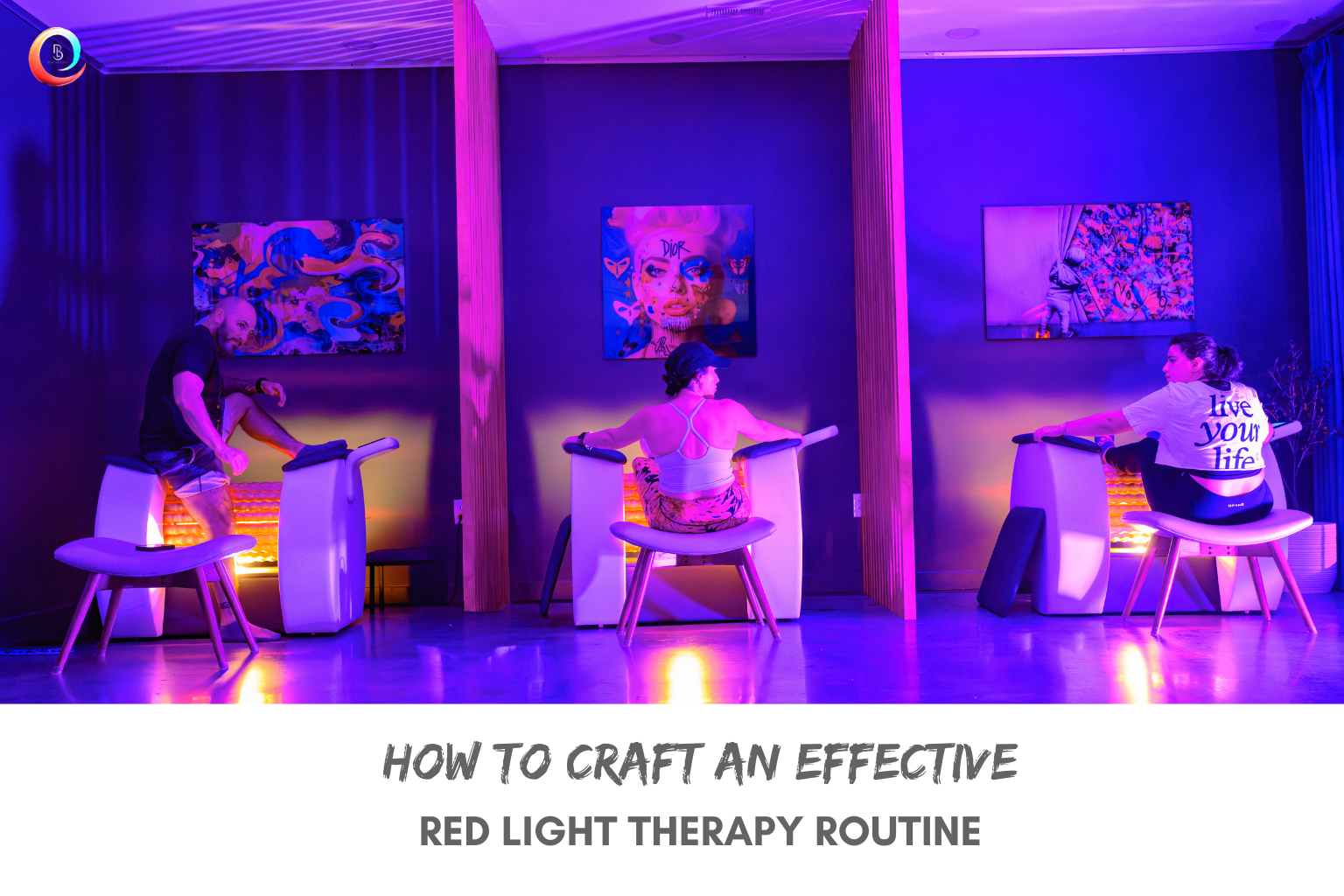
The Importance of a Repeatable Routine for Skin, Energy, and Recovery
Remember when you first started that new supplement (or facial, workout, or post workout recovery technique) and within a week or two your skin, energy, or body felt like a completely different (better) version of itself? Then you hit that dreaded plateau. Or maybe you just could not stay as motivated with it to begin with. The on again, off again rhythm of modern wellness is frustrating and all too common.
Especially here in Myrtle Beach, where life for hardworking pros and ambitious families is busy and unpredictable, priorities are always shifting and it can feel hard to stay consistent.
The good news is that when it comes to red light therapy, sticking to a beneficial routine is actually easier and less intimidating than you might think.
At Body Lab Studio, we are not here to give you a one off quick fix (though that is admittedly part of the fun). We want to help you build a non-invasive, scientifically supported self care ritual that is flexible enough for real life but powerful enough to create a true level up in what your skin, body, and energy look, feel, and can do.
The Beauty of Habit: Why Routine Red Light Is Most Impactful
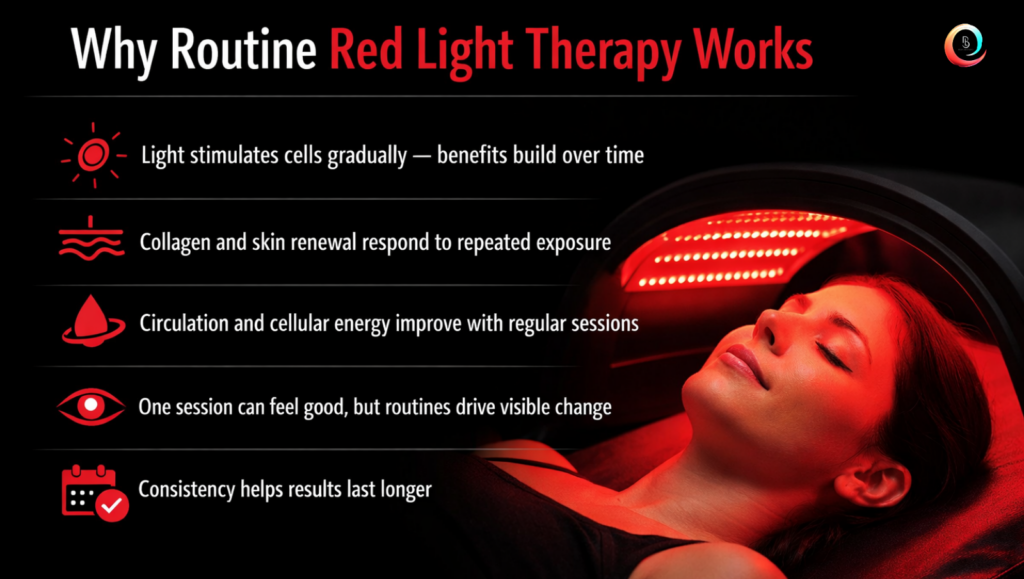
Simply put, regular sessions of red light therapy can support:
- Cell stimulation for quicker turnover and brighter, smoother skin
- Collagen and elastin for firmer, tighter texture
- Circulation and inflammation reduction for better energy and mood
- Supports cellular recovery and resilience.
Clinical research supports the benefits of consistent use. Studies on red and near-infrared light therapy have shown improvements in skin tone, texture, and collagen density after several weeks of repeated treatments (Wunsch & Matuschka, 2014). Laboratory and clinical research also indicates that photobiomodulation can stimulate fibroblast activity and support collagen production over time rather than after a single exposure.
In the exercise and recovery space, small controlled studies suggest that red and near-infrared light used before or after training may help support fatigue resistance, circulation, and subjective recovery when applied repeatedly across training sessions (Dellagrana et al., 2018; Mero et al., 2015). Reviews of photobiomodulation research also highlight potential effects on mitochondrial activity, nitric-oxide signaling, and microcirculation with regular use over days to weeks (Salehpour et al., 2018; Kashiwagi et al., 2022).
So why does repeated exposure have the edge for long term benefits in skin, energy, and body? It comes down to how cells, circulation, and connective tissue respond to regular stimuli. Just like strength training or skincare, red light therapy works best when it is treated like a practice, not a one time event.
Why Routine Red Light Is Most Effective: A Little Bit of Science
Science and our clients both point to the same conclusion: for sustainable, high impact results in skin and energy, repetition is essential.
Red and near-infrared light, often referred to as photobiomodulation, is absorbed by light-sensitive molecules in cells, including chromophores such as cytochrome c oxidase within the mitochondria. This interaction helps influence cellular energy processes and signaling pathways.
This absorption leads to:
- Enhanced mitochondrial function and ATP production
- Transient increases in nitric oxide, which support vasodilation and circulation
- Modulation of inflammation and oxidative stress
- Upregulation of signaling pathways that stimulate fibroblasts and collagen production
In human clinical studies, repeated red light therapy sessions over several weeks have been linked with improvements in fine lines, wrinkles, and skin texture. Some trials have even measured increases in collagen density using ultrasound after a series of treatments (Wunsch & Matuschka, 2014; Herrera et al., 2024). Other LED studies conducted over 8–12 weeks have reported smoother skin and more even tone (Baez & Reilly, 2007; Goldberg et al., 2006).
Researchers believe these changes are connected to how red and near-infrared light interact with cells. Reviews of photobiomodulation research suggest that regular exposure can support nitric oxide signaling, microcirculation, and mitochondrial activity, processes that help tissues receive oxygen and nutrients more efficiently and may contribute to healthier-looking skin and improved energy (Kashiwagi et al., 2022; Keszler et al., 2022).
Beyond Skin: Recovery and Performance Support
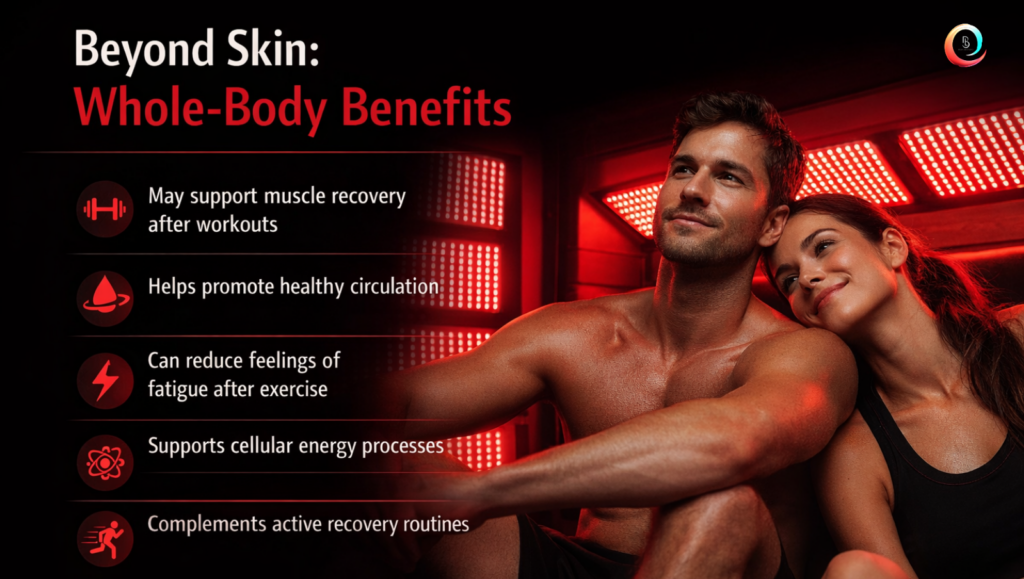
Photobiomodulation has also been explored in the context of exercise and recovery. In small controlled studies, red or near-infrared light applied before running tests increased time to exhaustion and influenced lactate dynamics, suggesting potential support for muscular efficiency and reduced perceived fatigue when used around workouts (Dellagrana et al., 2018).
In the infrared space, repeated post-exercise infrared sauna sessions have shown modest improvements in muscle soreness and neuromuscular recovery over multi-week protocols (Mero et al., 2015; Ahokas et al., 2025). Together, these findings suggest that light-based and heat-based therapies can complement a broader recovery routine.
For real-world results, the key is consistency. Most clients benefit from returning regularly for red light therapy sessions, often complemented by infrared wellness, lymphatic drainage, and, depending on their goals, EMS and RF sculpting.
The exact cadence depends on your goals, but the mindset is simple: treat it like a ritual you return to week after week, not a one-time experiment.
Recommended Routines: The Ideal Frequency and Flow of Sessions
Your red light routine is not one size fits all. The ideal frequency depends on what you want to improve most, such as skin, body, or energy, and where you are in your journey. However, we can offer clear starting structures that work for most people.
General Recommendations for Most Clients
Skin renewal and texture improvement
- Initial phase: 2–3 times per week for 4–8 weeks
- Ongoing maintenance: 1 time per week
This cadence reflects clinical protocols where red LED treatments were applied multiple times per week over at least 4–12 weeks to significantly improve fine lines, wrinkles, and skin roughness. Collagen remodeling is gradual, so regular exposure at the start followed by a lighter maintenance schedule tends to give both visible and lasting results (Wunsch & Matuschka, 2014; Baez & Reilly, 2007).
Energy and mood support
- Initial phase: 2–3 times per week
- Ongoing maintenance: 1–2 times per week
While energy and mood changes are often noticed quickly, research on photobiomodulation for brain and systemic benefits suggests that several weeks of repeated treatments lead to more consistent improvements in fatigue, subjective well being, and cognitive function (Salehpour et al., 2018). Using red light as a recurring reset in your week is more impactful than an occasional pick me up.
Enhanced recovery and post workout sessions
- Initial phase: After challenging activity, 1–3 times per week as needed
- Ongoing maintenance: 1–3 times per week around heavier training days
Studies on athletes and active adults show that red and near infrared light applied before or after exercise can improve performance and reduce soreness when repeated around training sessions (Dellagrana et al., 2018). Combining this with periodic infrared sauna can further support neuromuscular recovery and perceived relaxation (Mero et al., 2015; Ahokas et al., 2025).
Body sculpting and support
- Initial phase: Combined with EMS and lymphatic treatments, typically 1–2 times per week during an active sculpting plan
- Ongoing maintenance: As needed to maintain tone and support circulation as part of a longer term body transformation plan
Red light, EMS, RF sculpting, and lymphatic drainage work best as part of a coordinated series. Regular exposure supports improved circulation, fluid balance, and tissue quality while EMS and RF address muscle tone and skin tightening.
Session Length and Stacking
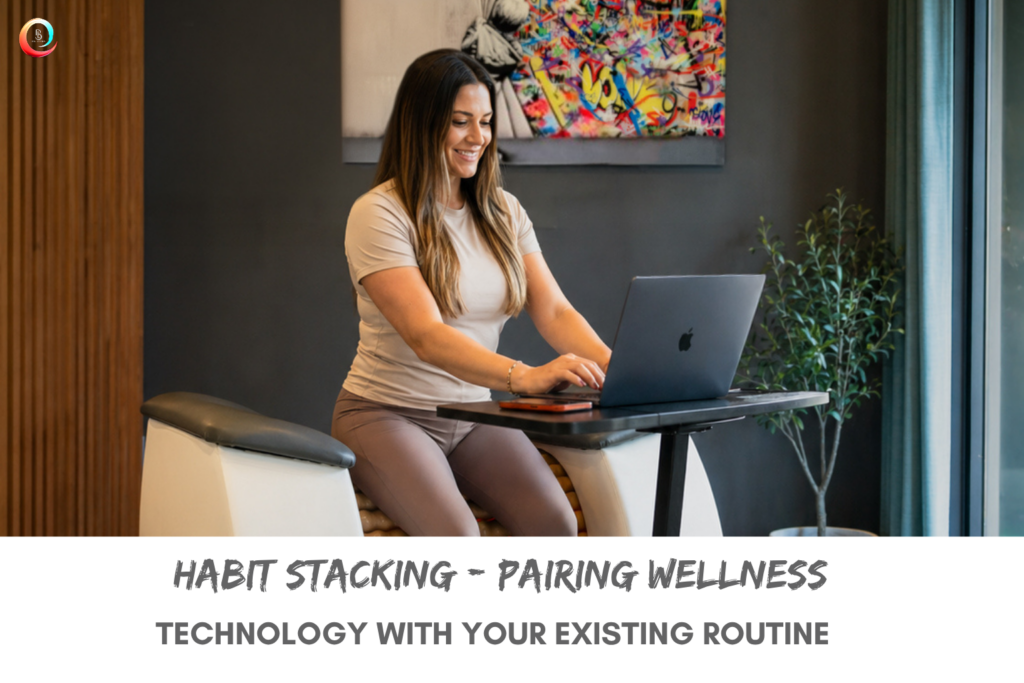
Most POLY Red Light Therapy sessions run 15–20 minutes. For busy schedules, these stack naturally alongside an infrared wellness or lymphatic drainage appointment, allowing you to address multiple goals within a single studio visit. Most clients see their best results from 2–3 sessions per week sustained over 4–8 weeks.
At Body Lab Studio, we often design appointments to combine:
- 15–20 minutes of red light therapy
- 20–30 minutes of infrared wellness or sauna
- Optional lymphatic drainage or EMS and RF sculpting
Tips for Turning Sessions into a Non-Negotiable Wellness Ritual
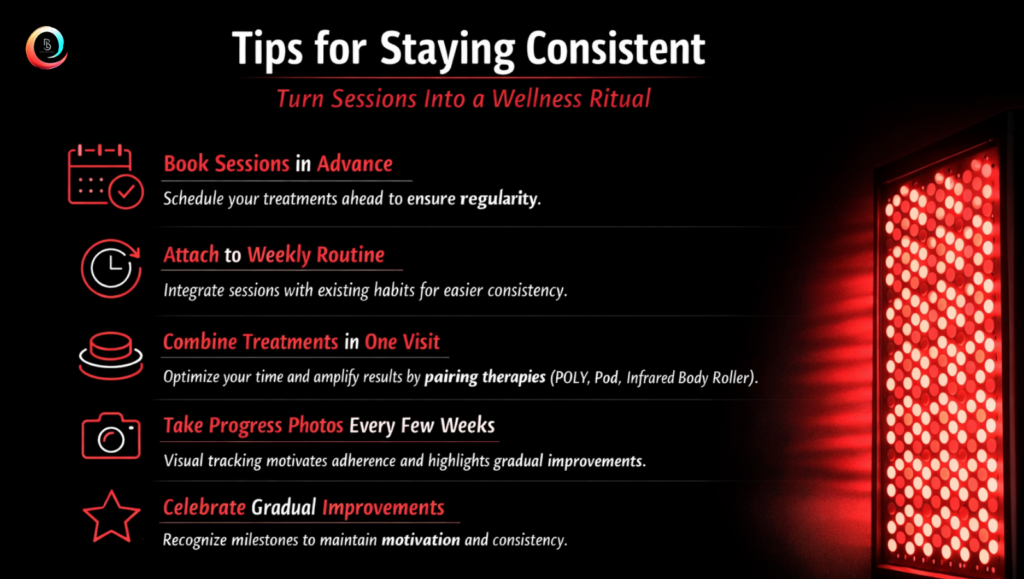
The difference between “I tried red light once” and “red light changed my skin, energy, and recovery” usually comes down to one thing: whether it becomes a habit.
Here are practical ways to make your routine stick.
Book Ahead of Time
The easiest way to follow through on your red light therapy Myrtle Beach routine is to schedule it like you would any non negotiable appointment or meeting. When it is on your calendar, it becomes a commitment rather than a wish.
We encourage clients to:
- Book several weeks of sessions in advance
- Anchor sessions to predictable parts of their schedule, such as the same time every Monday and Thursday
- Treat it as a reset they protect rather than something they squeeze in only if there is time
Stack Like a Boss
You are more likely to stick with a routine when it is efficient. Combining modalities gives you more results in less time.
Smart stacking options include:
- Red light plus infrared wellness Myrtle Beach in a single appointment
- Red light followed by lymphatic drainage for circulation, detox, and glow
- Red light as a prelude to EMS and RF sculpting so muscles and tissues are primed
Science supports this kind of multi-modal approach. Infrared exposure after workouts has been associated with improved neuromuscular recovery and reduced soreness when repeated over weeks (Mero et al., 2015; Ahokas et al., 2025), and mechanistic research on nitric oxide and circulation suggests that both red and infrared light can enhance microvascular function over time (Kashiwagi et al., 2022; Keszler et al., 2022).
Make Time for Real Me Time
Rather than treating red light as just another task, use it as an enforced pause in your week. During your 15–30 minute session, you can:
- Lay back and listen to music or a favorite podcast
- Practice a short guided meditation
- Use breathwork to downshift your nervous system
- Visualize your goals for your transformation plan
Linking the ritual to genuine relaxation not only makes you more likely to keep it up, but also reinforces the nervous system and stress benefits that pair naturally with improved circulation and energy.
Track and Celebrate
What gets measured gets noticed. Tracking helps you see the payoff of your consistency.
You can:
- Take a before photo and new photos every 2–4 weeks under similar lighting
- Keep a simple log of how your skin, sleep, energy, and soreness feel each week
- Note changes in workout performance or how quickly you bounce back after activity
Clinical studies suggest that improvements in skin texture, fine lines, and overall tone often begin to appear after several weeks of consistent LED use, commonly within a 4–12 week window (Wunsch & Matuschka, 2014). Research in exercise settings also indicates that repeated photobiomodulation sessions may influence fatigue and recovery markers over time (Dellagrana et al., 2018). Tracking your own progress over those weeks can make it easier to notice the gradual changes and stay motivated.
Communicate with Your Body Transformation Specialists
At Body Lab Studio, our team is here to:
- Understand your goals for skin, energy, and body
- Adjust your red light schedule and stacking plan based on your progress and feedback
- Help you balance frequency and intensity so you get results without burning out your schedule
Your routine is a living plan, not a rigid prescription. Together, we refine it as your skin and body respond.
Integrating Modalities: Synergy for Skin, Energy, and Body Transformation
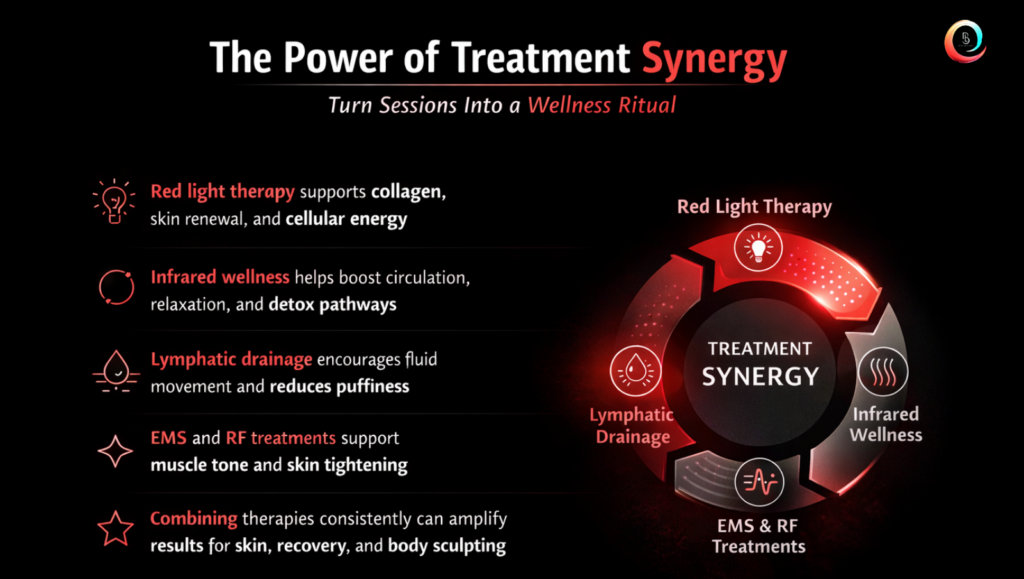
The biggest transformation secrets are not magical. They are cumulative. We use and recommend multi modal, regular exposure as the ideal way to achieve and maintain meaningful, repeatable improvements at Body Lab Studio.
Red Light Therapy Myrtle Beach
- Supports enhanced collagen and elastin production for firmer, smoother skin
- Encourages skin renewal and more even tone
- May boost cellular energy and circulation through nitric oxide and mitochondrial effects, which can translate into more consistent energy and better post workout recovery
Research shows that red and near infrared light can improve wrinkles, skin roughness, and collagen density when applied regularly over weeks (Wunsch & Matuschka, 2014; Herrera et al., 2024), and mechanistic work points to improved microcirculation and mitochondrial function as part of the explanation (Kashiwagi et al., 2022; Keszler et al., 2022).
Infrared Wellness Myrtle Beach
- Helps promote detoxification through sweating
- Supports circulation, relaxation, and perceived recovery after training
- Offers a calming, parasympathetic environment that pairs well with body transformation work
Repeated infrared sauna exposure after exercise has been associated with improved neuromuscular performance recovery and reduced soreness in small but rigorous trials (Mero et al., 2015; Ahokas et al., 2025), and users consistently report deep relaxation and improved sense of well being with regular use.
Lymphatic Drainage
- Assists with moving excess fluid and metabolic waste out of tissues
- Can reduce puffiness and support a more sculpted appearance
- May enhance the effects of red and infrared light by helping the body clear what tissues release during enhanced circulation and detox
Combining lymphatic work with circulation enhancing tools like red and infrared makes physiologic sense and tends to translate into better visible results and less heavy or sluggish feelings in the body.
EMS and RF Sculpting
- EMS, or electrical muscle stimulation, helps activate and strengthen muscles in a targeted way
- RF, or radiofrequency, supports skin tightening and improved tone
- When paired with red light, infrared, and lymphatic work, these tools contribute to visible definition and smoother contours as part of a body transformation plan
Mechanistic studies on light activated ion channels and opsins suggest that light and heat based therapies can modulate pain, inflammation, and tissue behavior at a cellular level (Sharma et al., 2023), which complements mechanical and electrical sculpting strategies as you progress through a series of treatments.
To make all this easy to maintain, our RESET Membership is designed with this synergy in mind. It helps you anchor powerful but non-invasive wellness tools into a sustainable routine for as long as you want access, guidance, and accountability.
Curious what EMS body sculpting feels like?
See It For YourselfFAQs for First Timers: What You Really Want to Know About a Regular Routine
1. How Long Before I Start to See a Difference?
A visible glow is often noticeable after only a few sessions. Many clients describe their skin looking slightly more radiant and feeling smoother within the first couple of weeks.
More gradual but very real changes in skin texture, fine lines, tone, clarity, and evenness, along with improvements in post-workout recovery and day-to-day energy, often peak between four and eight weeks of regular sessions.
This time frame is consistent with clinical LED studies showing measurable improvements in wrinkles and surface roughness over four to twelve week protocols (Wunsch & Matuschka, 2014; Baez & Reilly, 2007; Goldberg et al., 2006). Research on repeated infrared and red light exposure in exercise settings also indicates benefits in performance and soreness reduction across multi-week training programs (Dellagrana et al., 2018; Ahokas et al., 2025).
2. Is There Such a Thing as Too Much Red Light?
As with most wellness approaches, there is an optimal range. Generally well-tolerated when protocols are followed, but more isn’t always better; we screen for contraindications and tailor frequency. Generally well-tolerated when protocols are followed, but more isn’t always better. We screen for contraindications and tailor frequency to each client’s needs.
Key points to keep in mind:
- Sessions are based on evidence-informed doses and frequencies supported by research and device specifications
- Extending sessions far beyond recommended times or increasing daily frequency does not necessarily improve results and may be unnecessary
- Our team will guide you on ideal exposure and frequency to prevent overstimulation
- We monitor your progress closely and adjust your plan to keep results within a safe and effective range
3. Will I Get Bored of My Routine?
Sessions are designed to be restorative, uplifting, and adaptable over time. Your therapist and body transformation team will:
- Adjust your session structure as your goals evolve
- Modify how different modalities are combined and sequenced
- Keep your experience fresh as your skin, body, and performance change
When you can see and feel your progress, the process naturally becomes something you look forward to rather than a routine task.
Why Red Light at Body Lab Studio? Informed Wellness, Real Results
At Body Lab Studio, we are not chasing every trend for the sake of novelty. We are here to offer informed wellness rooted in research, real world experience, and a deep respect for your time and goals.
We want you to:
- Understand how and why red light, infrared, lymphatic drainage, and EMS and RF sculpting work
- Feel in control and confident about the treatments you choose
- Experience a clear connection between your consistent routine and the results you see in the mirror and feel in your day to day life
From your first Discovery consult through the full arc of your transformation plan, our focus is on building a realistic, repeatable routine that fits into your lifestyle and delivers visible, sustainable results.
Ready to Create Your Wellness Routine with Us?
It is time to stop throwing money at random quick fixes or stocking up on miracle products you never actually use.
Instead, find your rhythm with Body Lab Studio’s whole body transformation tools and discover what a real, sustainable level up with red light therapy in Myrtle Beach feels like, starting with your very first appointment.
You can:
- Book a Discovery consult to map out your goals and ideal routine
- Explore our RESET Membership to anchor your sessions into a predictable, supportive plan
- Schedule your first infrared plus red light session and experience for yourself how it feels to combine science backed light therapies with expert guidance
Consistency is key. We are here to help you make it simple, enjoyable, and truly transformative.
References
Wunsch, A., & Matuschka, K. (2014). A controlled trial to determine the efficacy of red and near infrared light treatment in patient satisfaction, reduction of fine lines, wrinkles, skin roughness, and intradermal collagen density increase. Photomedicine and Laser Surgery, 32(2), 93–100. This randomized controlled trial (n = 136; 30 facial sessions over about 15 weeks) found significant improvements in wrinkles, skin roughness, and collagen density with repeated red and near infrared LED treatments.
Link: https://www.ncbi.nlm.nih.gov/pmc/articles/PMC3926176/
Baez, F., & Reilly, L. R. (2007). The use of light emitting diode therapy in the treatment of photoaged skin. Journal of Cosmetic Dermatology, 6(3), 189–194. This prospective clinical study (n = 31; 8 LED treatments over 4 weeks, with follow up to 12 weeks) reported improvements in skin roughness, fine lines, and mottled pigmentation after a series of LED treatments.
Link: https://pubmed.ncbi.nlm.nih.gov/17760601/
Goldberg, D. J., Amin, S., Russell, B. A., Phelps, R., Kellett, N., & Reilly, L. A. (2006). Combined 633 nm and 830 nm LED treatment of photoaging skin. Journal of Drugs in Dermatology, 5(8), 748–753. In this open label trial (n = 52; 9 LED sessions over 5 weeks), combined red and near infrared LED treatments improved fine lines, pigmentation, and tactile roughness, supporting repeated treatment for visible skin changes.
Link: https://pubmed.ncbi.nlm.nih.gov/17021624/
Dellagrana, R. A., Rossato, M., Sakugawa, R. L., Baroni, B. M., & Diefenthaeler, F. (2018). Photobiomodulation therapy on physiological and performance parameters during running tests: Dose response effects. Journal of Strength and Conditioning Research, 32(10), 2807–2815. This randomized crossover study (n = 10 recreational runners; multiple test days with different light doses) showed that appropriately dosed photobiomodulation applied before running increased time to exhaustion and altered lactate responses.
Link: https://pubmed.ncbi.nlm.nih.gov/28787219/
Mero, A., Tornberg, J., Mäntykoski, M., & Puurtinen, R. (2015). Effects of far infrared sauna bathing on recovery from strength and endurance training sessions in men. SpringerPlus, 4, 321. This crossover study (n = 10 physically active men) compared recovery after strength and endurance sessions with and without far infrared sauna; far infrared sauna improved countermovement jump height 30 minutes after endurance exercise and was reported as comfortable and light loading, supporting its use as a recovery aid.
DOI landing page: https://doi.org/10.1186/s40064-015-1093-5
Direct PDF: https://springerplus.springeropen.com/counter/pdf/10.1186/s40064-015-1093-5.pdf
Ahokas, E. K., Hanstock, H. G., Kyröläinen, H., & Ihalainen, J. K. (2025). Effects of repeated use of post exercise infrared sauna on neuromuscular performance and muscle hypertrophy. Frontiers in Sports and Active Living, 7, 1462901. This randomized controlled trial (n = 30 resistance trained adults over 8 weeks) found that adding a 10 minute infrared sauna after training did not impair adaptations and produced small additional benefits for some jump and sprint measures, suggesting regular infrared use can be safely integrated into training recovery.
Link: https://www.frontiersin.org/journals/sports-and-active-living/articles/10.3389/fspor.2025.1462901/full
Salehpour, F., Mahmoudi, J., Kamari, F., Sadigh Eteghad, S., Rasta, S. H., & Hamblin, M. R. (2018). Brain photobiomodulation therapy: A narrative review. Journal of Cerebral Blood Flow and Metabolism, 38(2), 283–305. This narrative review summarizes many preclinical and clinical photobiomodulation studies, typically involving repeated red and near infrared exposures over days to weeks, and reports improvements in cognition, mood, sleep, and fatigue with consistent treatment.
Link: https://www.ncbi.nlm.nih.gov/pmc/articles/PMC5789538/
Kashiwagi, S., Kanno, T., Ishikawa, M., Tanaka, M., & Nakazawa, H. (2022). Photobiomodulation and nitric oxide signaling. Redox Biology, 54, 102358. This mechanistic review compiles multiple in vitro and in vivo experiments showing that repeated red and near infrared light exposures enhance nitric oxide release, vasodilation, microcirculation, and mitochondrial function, providing a biological basis for energy and recovery benefits.
Link: https://linkinghub.elsevier.com/retrieve/pii/S1089860322001240
Keszler, A., Lindemer, B., Broeckel, G., Weihrauch, D., Gao, Y., & Lohr, N. L. (2022). In vivo characterization of a red light activated vasodilation: A photobiomodulation study. Frontiers in Physiology, 13, 880158. This mouse study examined 670 nm red light applied to the hindlimb and found nitric oxide related vasodilation, increased blood flow for at least 30 minutes, and improved perfusion over 14 days of repeated treatment in a model of reduced limb blood flow.
Link: https://www.frontiersin.org/journals/physiology/articles/10.3389/fphys.2022.880158/full
Sharma, S., Van Staden, A. D. P., Abrahamse, H., & Sagar, S. (2023). Role of opsins and light or heat activated transient receptor ion channels in infrared therapy. Photodiagnosis and Photodynamic Therapy, 42, 103324. This review covers numerous cell and animal studies using repeated infrared and red light exposures, showing how opsins and transient receptor potential ion channels mediate analgesic, anti inflammatory, and vasodilatory effects relevant to multimodal infrared and sculpting protocols.
Link: https://www.sciencedirect.com/science/article/pii/S2666469023000015
Herrera, M. A., Ribas, A. P., da Costa, P. E., & Baptista, M. S. (2024). Red light photons on skin cells and the mechanism of photobiomodulation. Frontiers in Photonics, 5, 1460722. This mini review discusses how red light in the 600–700 nm range interacts with skin cells, endogenous photosensitizers, nitric oxide homeostasis, and gene expression, synthesizing mechanistic data that explains how repeated red light exposure can activate metabolic and signaling pathways relevant to skin health and conditions like psoriasis.
Link: https://www.frontiersin.org/journals/photonics/articles/10.3389/fphot.2024.1460722/full